Not Currently Offered — Educational Only
Intimacy Blend is not currently available as a service at Zvia. We're being deliberate about which compounds we list for prescription as we refine our peptide therapy catalog. This page remains available as an educational resource.
When Intimacy Starts Feeling Like Something You Used to Have
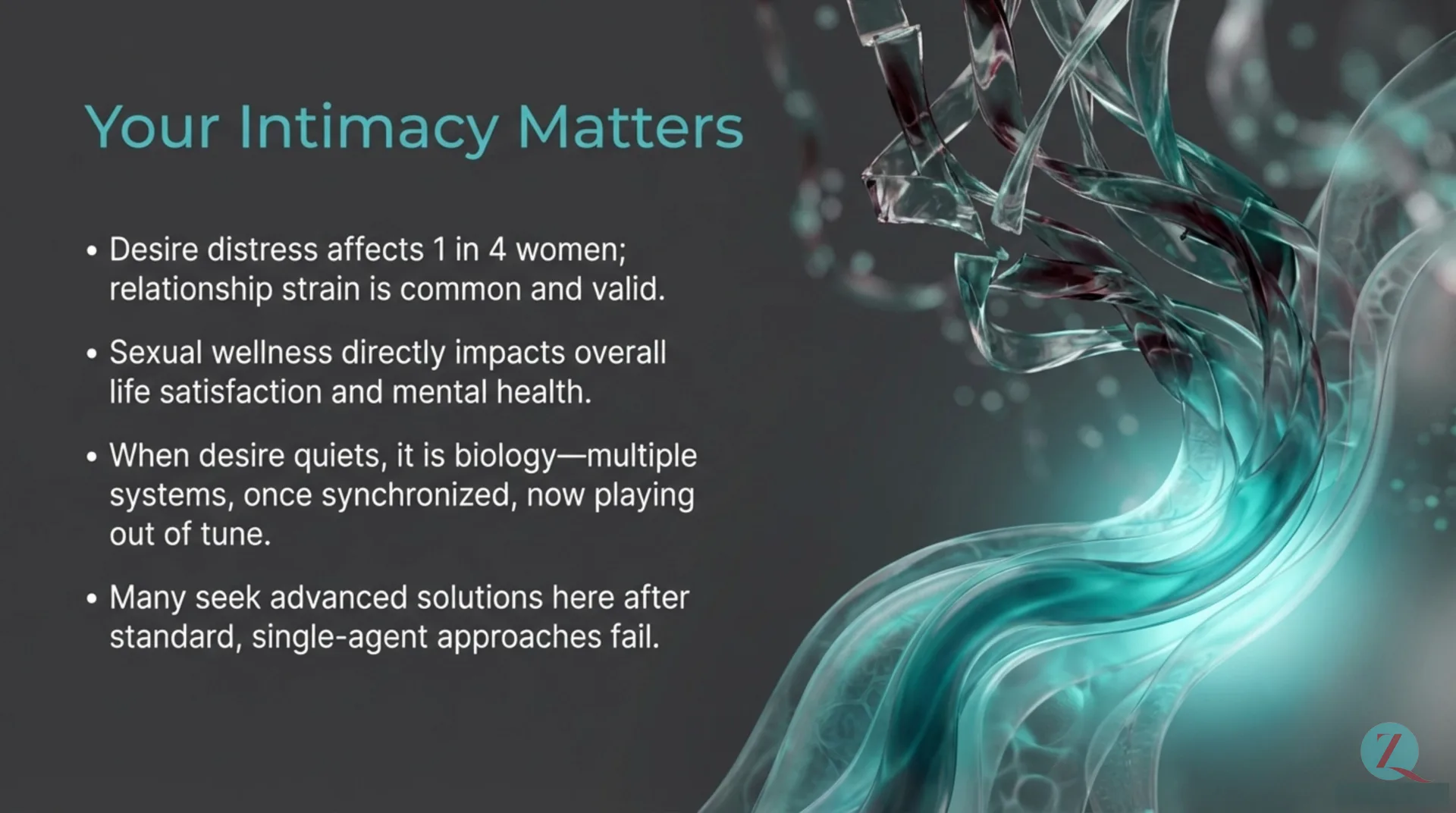
The desire is quieter than it used to be. The connection is there — but the spark that used to ignite without thinking? That takes effort now. And it's not for lack of caring.



20-minute audio overview — how the Intimacy Blend works, delivery method, and your expected timeline
What Is the Intimacy Blend?
There’s a particular kind of frustration that comes when the emotional connection is still there — you love this person, you want to want them — but your body and brain aren’t cooperating. Maybe desire used to show up on its own and now it feels like summoning something that’s gone quiet. Maybe the physical response is there but the deeper sense of connection has dimmed. Maybe you’ve tried single-agent approaches and they addressed one piece without touching the others.
This is not a character flaw. It is biology — and it is addressable.
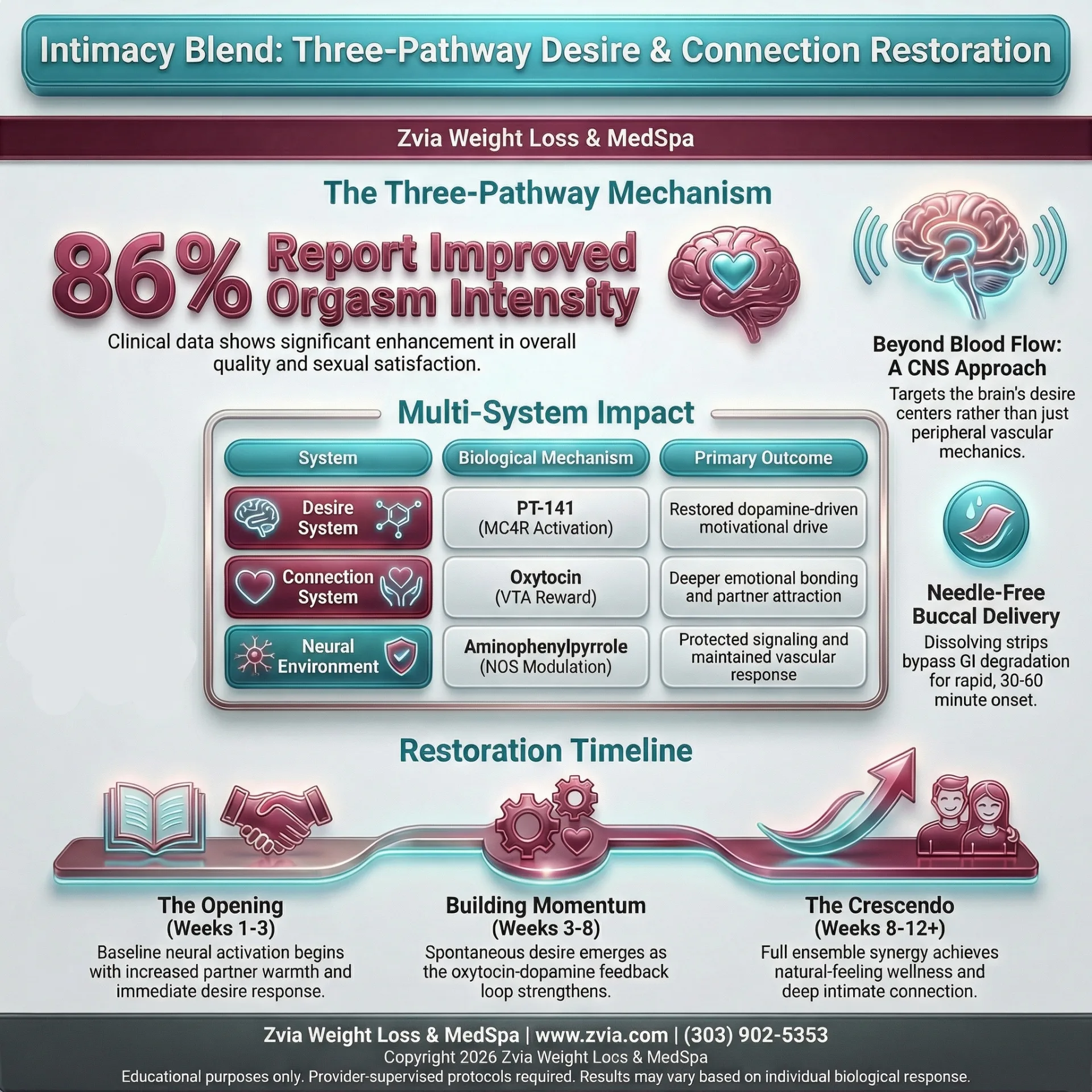
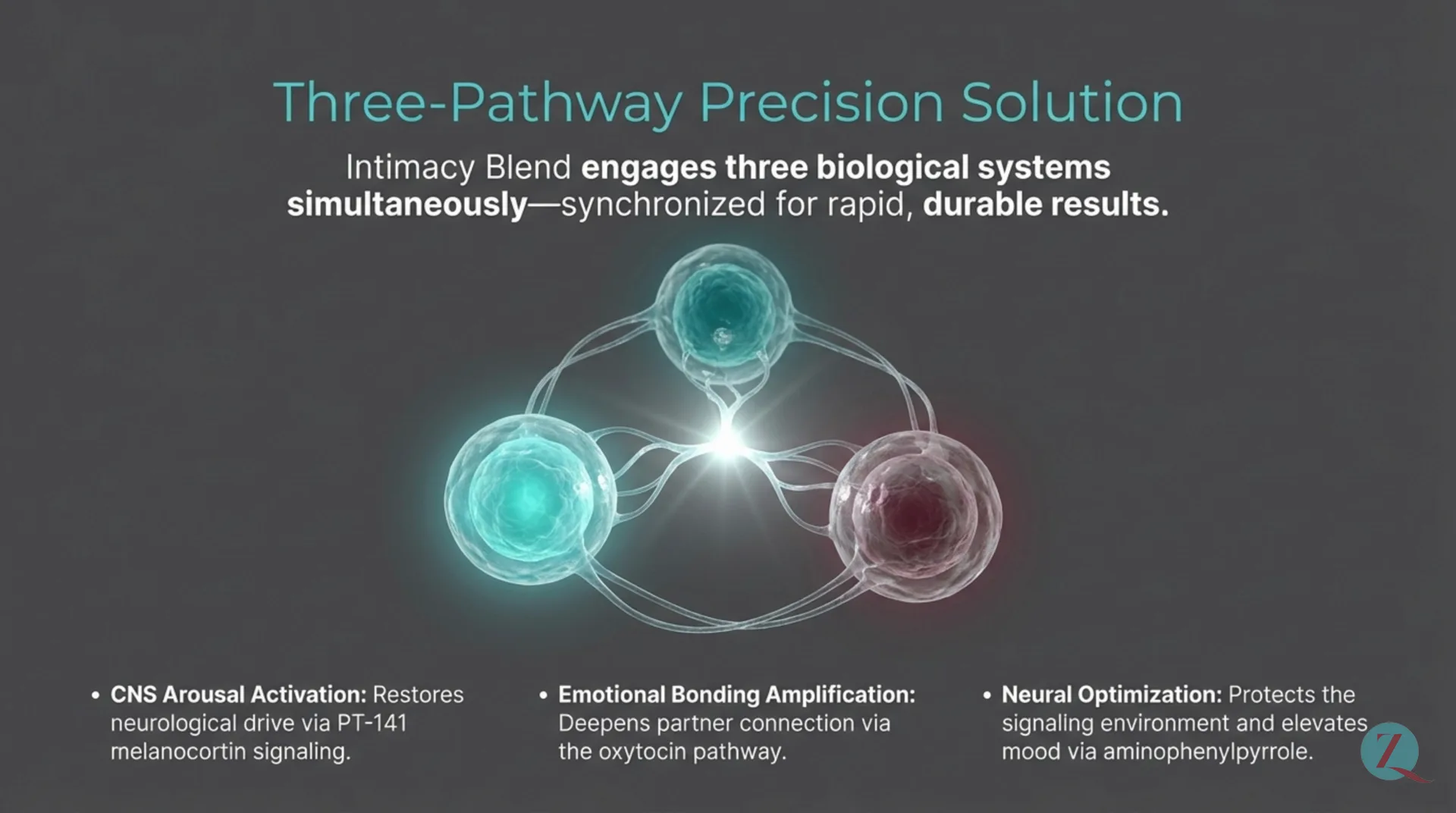
The Intimacy Blend is a precision-curated combination of three compounds — PT-141 (bremelanotide), oxytocin, and aminophenylpyrrole — each targeting a different dimension of intimate wellness. PT-141 is a synthetic melanocortin receptor agonist that restores sexual desire through central nervous system pathways 1. Oxytocin is the neuropeptide that drives emotional bonding, partner connection, and orgasm intensity 8, 9. Aminophenylpyrrole is a phenylpyrrole derivative that optimizes the neural signaling environment where both compounds operate 12. Together, they form a three-pathway approach to intimacy restoration that no single compound can achieve alone.
Delivered via buccal dissolving strip — similar to a breath strip placed on the inner cheek — the blend eliminates injection barriers and supports the spontaneity that matters in intimate moments.
How Does It Work?
The Desire Pathway: PT-141
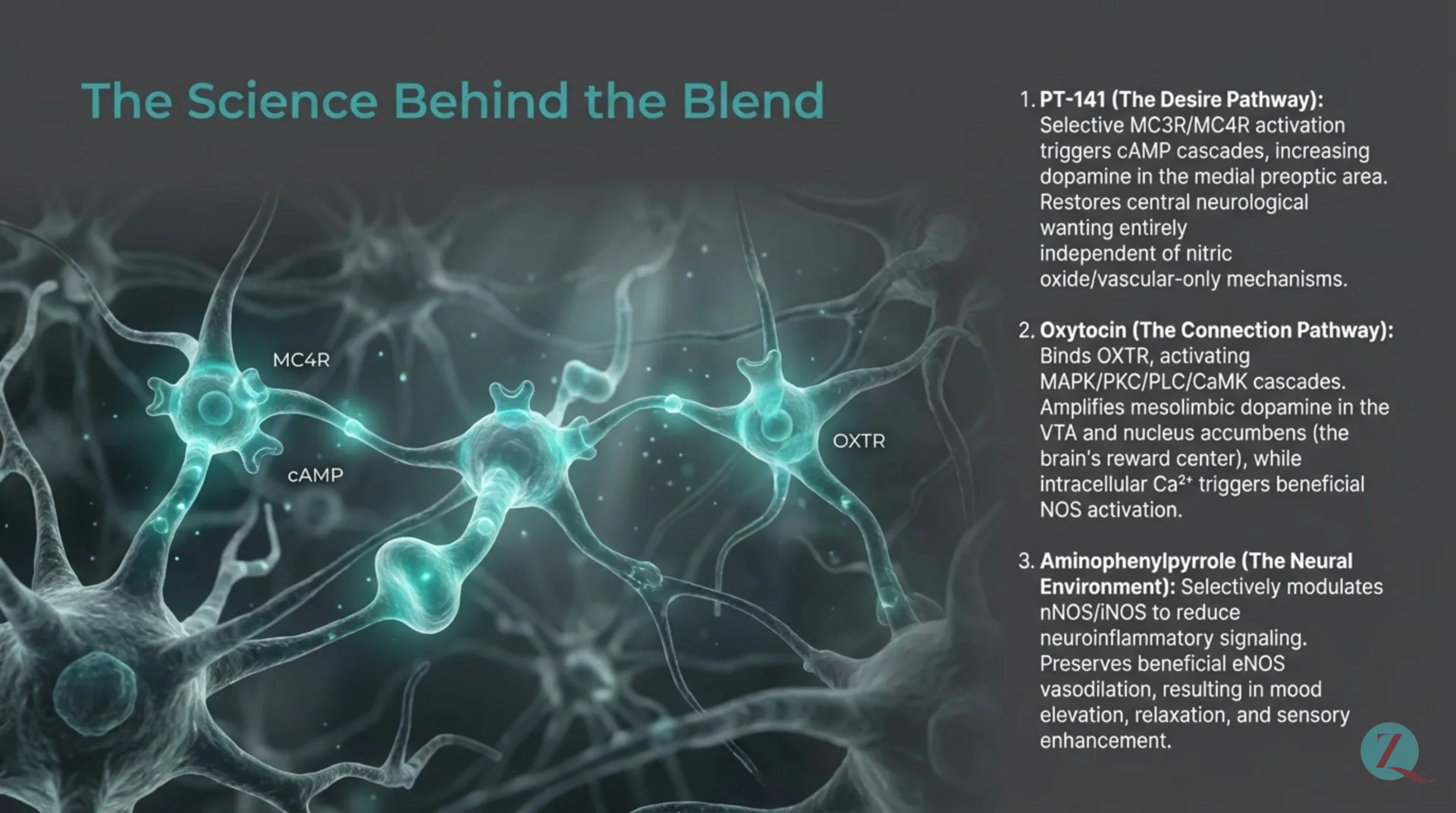
PT-141 works fundamentally differently from vascular-only approaches like PDE5 inhibitors. Instead of targeting blood flow, it activates melanocortin-4 receptors (MC4R) in brain regions governing sexual motivation — most critically in the hypothalamus 1, 14. This triggers a cascade: MC4R coupling to Gs/Gq proteins initiates cAMP production and phospholipase-C signaling, which elevates intracellular calcium and recruits ERK/MAPK cascades 3. The critical downstream event is increased dopamine release in the medial preoptic area — dopamine being the neurotransmitter directly responsible for sexual desire 3.
PT-141 also activates MC3R, which participates in mesolimbic dopamine regulation in the ventral tegmental area-nucleus accumbens loop 3. The combined MC3R/MC4R activation creates what researchers describe as a three-layer arousal model: MC4R primes autonomic and endocrine readiness while MC3R enhances spontaneous approach behavior 1. This restores the wanting — the neurological drive behind desire — not just the physical mechanics of response.
The Connection Pathway: Oxytocin
Oxytocin bridges the gap between physical response and emotional intimacy. Produced in the hypothalamus and released centrally as a neurotransmitter, oxytocin acts on receptors in the paraventricular nucleus (PVN), ventral tegmental area (VTA), and nucleus accumbens 10, 11. When oxytocin stimulates VTA neurons, it triggers dopamine release in the nucleus accumbens — the brain’s reward center — creating a bidirectional feedback loop with the desire pathway 10, 11.
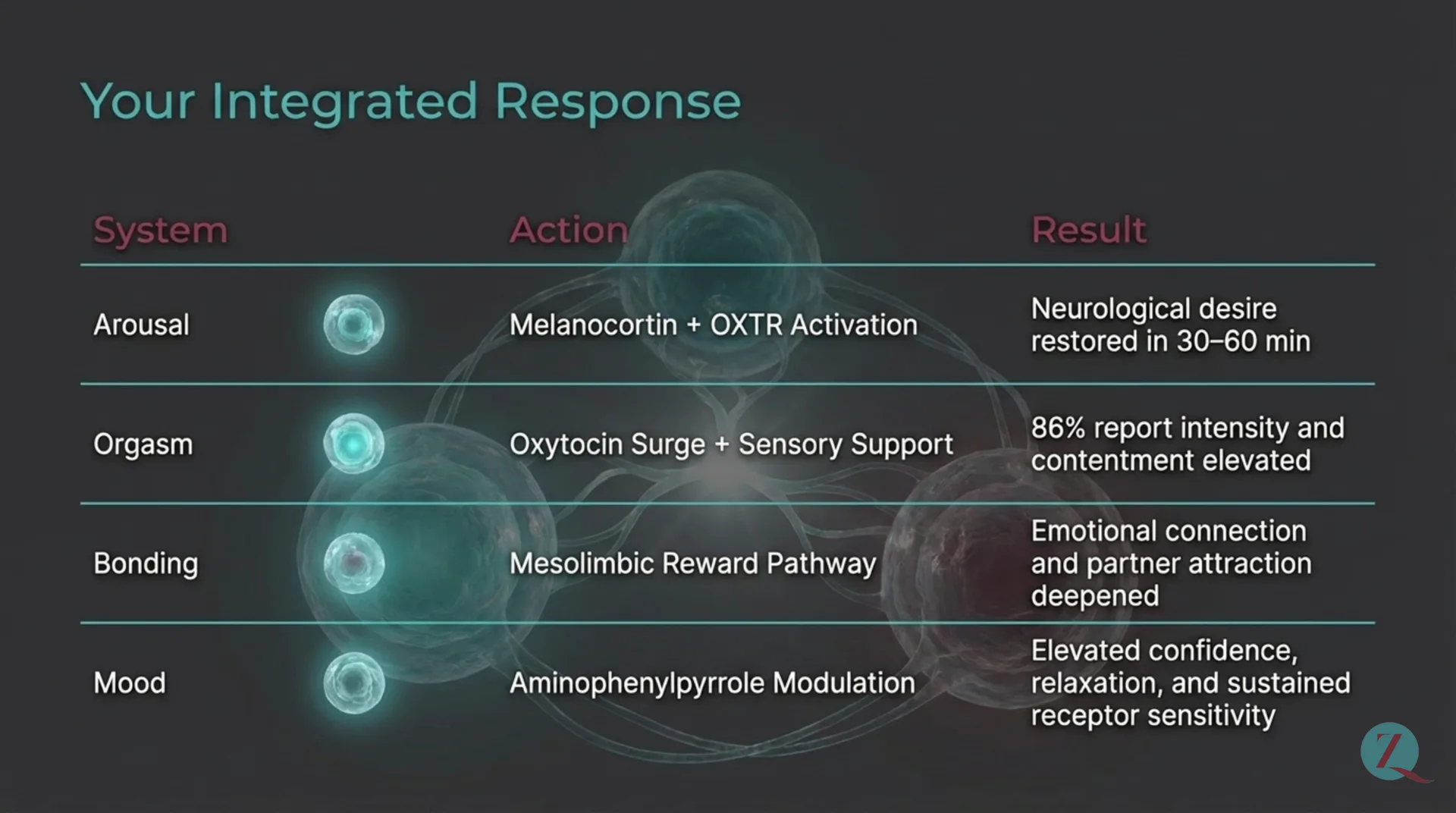
Research demonstrates that oxytocin selectively enhances the brain’s reward response to partner-specific interaction, making subjects perceive their partner as more attractive compared to unfamiliar individuals 7. It also amplifies orgasm intensity, with systematic reviews confirming that 86% of users report improved orgasm quality and increased sexual satisfaction 9, 13.
The Neural Optimization Pathway: Aminophenylpyrrole
Aminophenylpyrrole, a phenylpyrrole derivative built on the pyrrole heterocyclic scaffold 13, selectively inhibits neural NOS (nNOS) and inducible NOS (iNOS) while preserving beneficial endothelial NOS (eNOS) function 12. This selectivity matters because nitric oxide serves dual roles: eNOS-produced NO drives the vasodilation essential for genital blood flow, while pathological NO overproduction from nNOS and iNOS contributes to neuroinflammation that can degrade receptor sensitivity over time 12.
Research on phenylpyrrole derivatives demonstrates that compounds like 5-(2-aminophenyl)-1H-pyrrole-2-carboxamide analogs prevent the increment of inducible NOS activity in both cytosolic and mitochondrial compartments 12 — protecting the neural environment where PT-141 and oxytocin operate.
The Convergence
All three compounds converge at mesolimbic dopamine signaling. PT-141 drives dopamine via melanocortin activation, oxytocin amplifies dopamine via VTA stimulation, and aminophenylpyrrole protects the neural environment from inflammatory interference. This is an ensemble — each compound amplifying the others through interconnected neurological architecture.
What Are the Benefits of the Intimacy Blend?
Restored Desire Through Central Pathway Activation
PT-141 reactivates the brain’s desire circuitry through MC4R-mediated dopamine release 3 — addressing the root neurological cause of diminished wanting, not just the downstream physical response.
Deeper Emotional Connection and Bonding
Oxytocin enhances partner-specific reward processing, increases feelings of closeness and attraction, and improves the ability to communicate sexual desires 7, 13. The emotional depth it adds transforms physical encounters into connected intimate experiences.
Amplified Orgasm Intensity
Clinical reports show 86% of users experience improved orgasm quality with oxytocin supplementation 9. Oxytocin levels naturally surge during orgasm; supplemental oxytocin amplifies this natural response.
Neuroprotective Neural Environment
Aminophenylpyrrole’s selective NOS modulation reduces neuroinflammatory signaling while preserving vasodilatory function 12 — creating a cleaner signaling environment that supports sustained therapeutic response.
Needle-Free Buccal Delivery
The dissolving strip format eliminates the injection requirement of FDA-approved bremelanotide 2, supports spontaneity, and is travel-friendly with no refrigeration or clinical supplies needed.
How Long Does the Intimacy Blend Take to Work?
Timeline Note: Individual response varies based on biology, baseline hormonal status, and lifestyle factors. Your Zvia provider would monitor your specific trajectory and adjust accordingly.
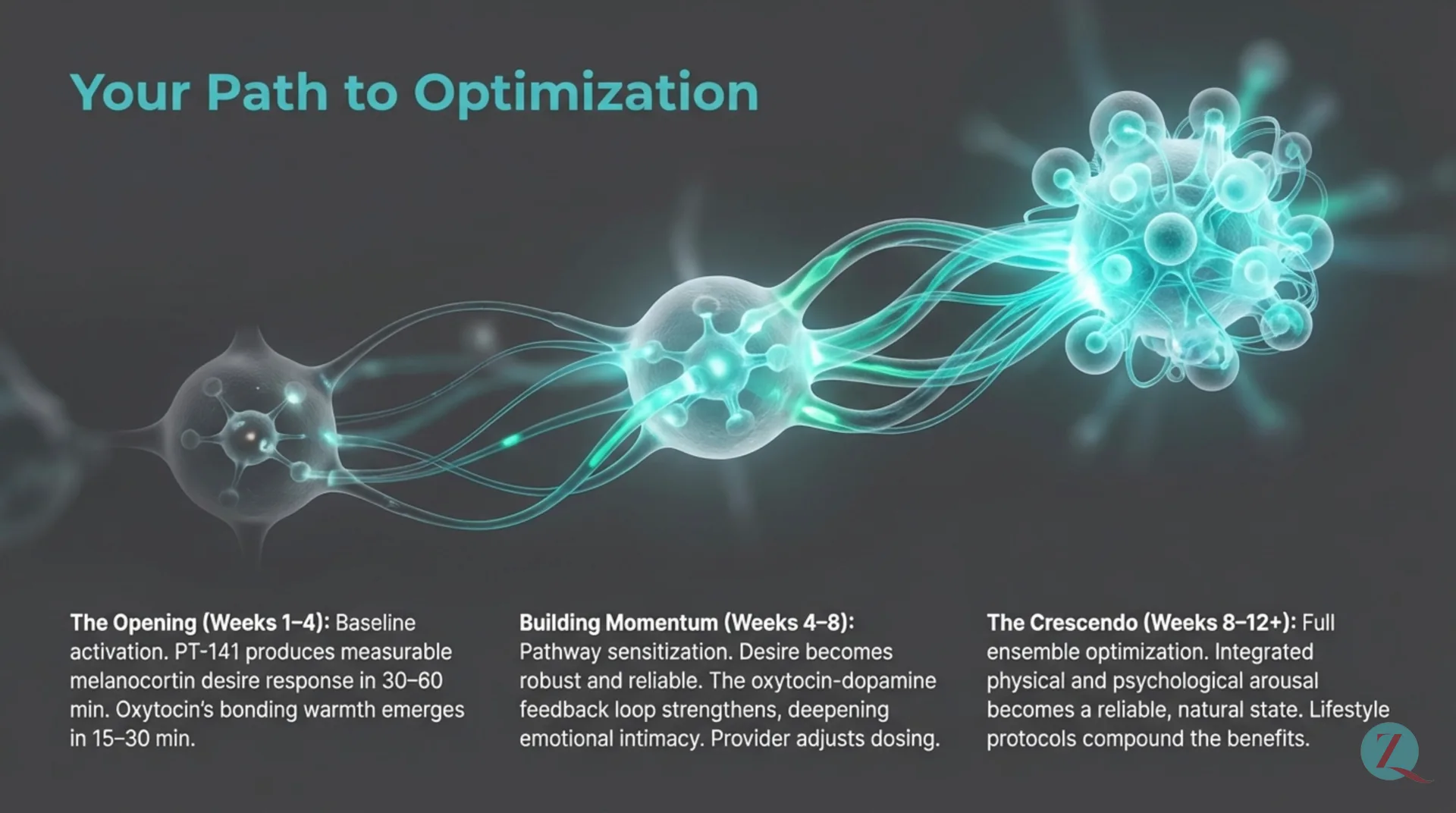
The Opening (Weeks 1–3)
First doses establish baseline neural activation. PT-141’s melanocortin engagement produces measurable desire response within 30–60 minutes of administration 2 — often the first signal that dormant pathways are reactivating. Oxytocin’s bonding effects emerge per dose with increased partner warmth and emotional openness. Aminophenylpyrrole begins cumulative neuroprotective modulation. Based on published research and typical response patterns, most people can expect a renewed sense of wanting, increased attentiveness to their partner, and physical responsiveness that feels more integrated during this window.
Building Momentum (Weeks 3–8)
Repeated use deepens the therapeutic response. Melanocortin pathway sensitization produces more robust desire activation. The oxytocin-dopamine feedback loop strengthens with repeated engagement — the neural architecture of bonding reinforces itself through use. Aminophenylpyrrole’s anti-inflammatory effects accumulate. Research on this timeline suggests most people can expect desire emerging more spontaneously, deeper emotional intimacy, increased orgasm intensity, and growing confidence.
The Crescendo (Weeks 8–12+)
The full ensemble manifests. All three pathways operate in coordinated synergy — desire, connection, and neural optimization as an integrated system. The protocol has moved beyond symptom management into genuine pathway restoration. At this stage, most people can expect intimate wellness to feel natural and sustainable, emotional connection at new depth, and confidence extending beyond the bedroom.
Is the Intimacy Blend Right for You?
If you’ve been dealing with desire that’s gone quiet — and you miss who you were when intimacy felt natural — the Intimacy Blend may be worth exploring with your Zvia provider.
You may be a strong candidate if you’re experiencing: diminished sexual desire despite wanting to want, reduced orgasm intensity or sexual satisfaction, emotional distance during intimate encounters despite caring deeply about your partner, or inadequate response to single-agent therapies (PDE5 inhibitors alone didn’t address the desire component, hormone therapy alone didn’t fully resolve the issue).
If you’re already healthy and looking to deepen an intimate connection that’s good but could be extraordinary, the blend’s multi-pathway approach addresses dimensions of intimacy that single-agent approaches simply don’t reach.
Both men and women respond to the Intimacy Blend — its central nervous system mechanism is not gender-specific 4. Your Zvia provider in Lakewood, Colorado would look at your labs, your health history, and your goals to determine if this is the right fit for you. That conversation is where the real precision starts.
What Does an Intimacy Blend Protocol Involve?
Buccal Delivery
The Intimacy Blend is compounded as a thin dissolving strip placed on the inner cheek. Mucosal absorption delivers all three compounds into systemic circulation, bypassing the gastrointestinal degradation that destroys peptides like oxytocin when swallowed 14. Typical onset is 30–60 minutes post-administration.
Your Zvia provider would determine precise dosing of each component based on your individual biological profile. The compounded formulation allows independent titration of all three compounds — a customization advantage unavailable with commercial single-agent products.
Lifestyle Protocol Integration
Your protocol includes specific lifestyle guidance that directly amplifies the blend’s mechanisms:
Nutrition: Adequate protein provides dopamine precursors (tyrosine, phenylalanine). Omega-3 fatty acids support receptor sensitivity. Nitrate-rich foods support the eNOS vasodilation that aminophenylpyrrole preserves.
Prescribed Activity: Your provider would prescribe modality, frequency, and intensity. Cardiovascular exercise supports endothelial function; resistance training supports hormonal optimization; mind-body practices support the parasympathetic state that facilitates oxytocin release.
Sleep: Dopamine receptor sensitivity, hypothalamic oxytocin synthesis, and inflammatory regulation are all sleep-dependent. Your Zvia care team would provide specific sleep protocols.
Stress Management: Chronic cortisol elevation suppresses both dopamine signaling and oxytocin release — directly opposing two of the blend’s three pathways. Individualized stress management would be a prescribed protocol component.
Safety Considerations
The most common side effect of the PT-141 component is nausea, occurring in approximately 40% of clinical trial participants, typically mild and transient 5. Flushing (20.6%) and headache (12.0%) are also reported 5. Long-term safety data from the RECONNECT trials’ 52-week open-label extension demonstrated a favorable safety profile with most adverse events being mild or moderate 5, 6. Your Zvia provider would conduct thorough evaluation including labs and health history before prescribing, and would monitor response through scheduled follow-up.
What Clinical Rigor Looks Like for a Protocol Like This
A blend like this isn’t something you pick up at a pharmacy and figure out on your own. A precision-curated ensemble — three compounds whose dosing, timing, and ratio require clinical expertise to optimize for a person’s specific biology — is the difference between a compounded product and actual care.
That’s the standard Zvia holds across our multi-pathway protocols: comprehensive lab panels, because understanding a person’s hormonal baseline matters for protocol design before any dosing decision is made. Independent titration of each component, because one person’s response to a compound like PT-141 may call for a different adjustment than their response to oxytocin. Coordinated monitoring across pathways, because an ensemble’s value depends on how the pieces work together, not just on co-administration. And the nutrition, sleep, and stress protocols that amplify a compound’s mechanism — because lifestyle integration is what turns pharmacology into lasting change.
This is what sets Zvia’s approach apart from telehealth volume models that prescribe a standard dose and check in quarterly, or DIY approaches that lack the clinical monitoring a multi-compound protocol demands. It’s the same rigor we bring to every therapeutic category we offer — and why our clinical team continually reviews compounds like this one to determine whether and how they fit into current protocols.
Educational purposes only. Provider-supervised protocols required. Results may vary based on individual biological response.
Common questions about Intimacy Blend
Is the Intimacy Blend safe?
How long does the Intimacy Blend take to work?
What are the side effects of the Intimacy Blend?
How is the Intimacy Blend administered?
Who is a good candidate for the Intimacy Blend?
Contact us to discuss your options — including therapies not yet listed here.
References
- 1. Molinoff PB et al. PT-141: a melanocortin agonist for the treatment of sexual dysfunction . Annals of the New York Academy of Sciences (2003).
- 2. DrugBank Bremelanotide: Uses, Interactions, Mechanism of Action . DrugBank Online (2024).
- 3. Kingsberg SA et al. Bremelanotide for the Treatment of Hypoactive Sexual Desire Disorder: Two Randomized Phase 3 Trials . Obstetrics & Gynecology (2019).
- 4. Diamond LE et al. An effect on the subjective sexual response in premenopausal women with sexual arousal disorder by bremelanotide (PT-141) . Journal of Sexual Medicine (2006).
- 5. Simon JA et al. Long-Term Safety and Efficacy of Bremelanotide for Hypoactive Sexual Desire Disorder . Obstetrics & Gynecology (2019).
- 6. Clayton AH et al. Safety Profile of Bremelanotide Across the Clinical Development Program . Journal of Women's Health (2022).
- 7. Rastrelli G, Maggi M Oxytocin, Erectile Function and Sexual Behavior: Last Discoveries and Possible Advances . International Journal of Molecular Sciences (2021).
- 8. Gimpl G, Fahrenholz F The Oxytocin Receptor System: Structure, Function, and Regulation . Physiological Reviews (2001).
- 9. Scheele D et al. Differential effects of intranasal oxytocin on sexual experiences and partner interactions in couples . Hormones and Behavior (2014).
- 10. Melis MR, Argiolas A Interactions between dopamine and oxytocin in the control of sexual behaviour . Progress in Brain Research (2008).
- 11. Goldstein I et al. Oxytocin Troches as Adjunctive Intervention for Men with Sexuality Concerns . Journal of Sexual Medicine (2023).
- 12. Maccallini C et al. Phenylpyrrole derivatives as neural and inducible nitric oxide synthase inhibitors . European Journal of Medicinal Chemistry (2008).
- 13. Ganesh S et al. Pyrrole: A Decisive Scaffold for the Development of Therapeutic Agents . ChemMedChem (2024).
- 14. King SH et al. Melanocortin Receptors, Melanotropic Peptides and Penile Erection . Current Topics in Medicinal Chemistry (2009).