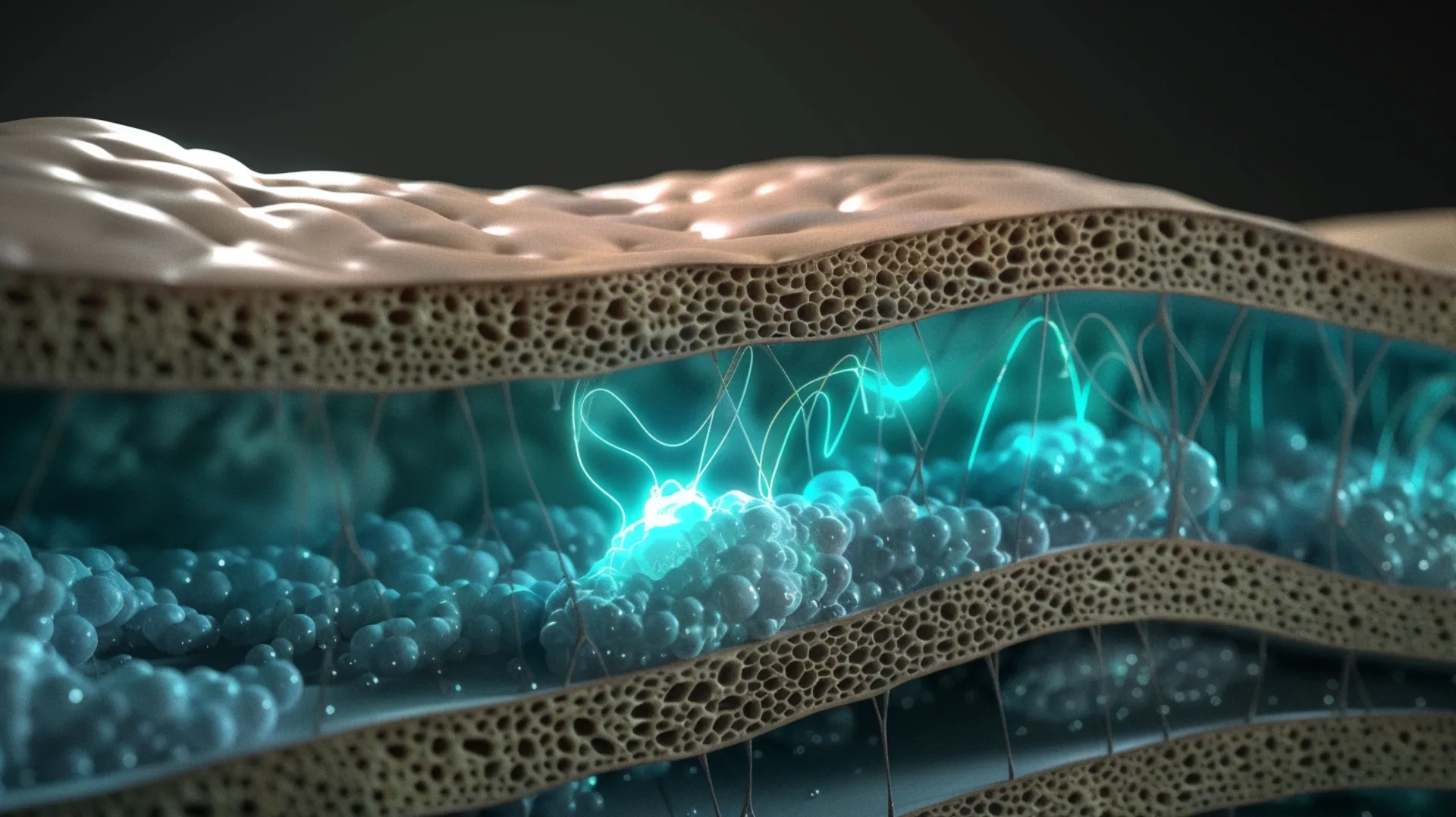
Your face feels a little loose where it used to feel taut. Your neck shows its age in ways you didn't expect. Your décolletage, once defined, has softened over time.
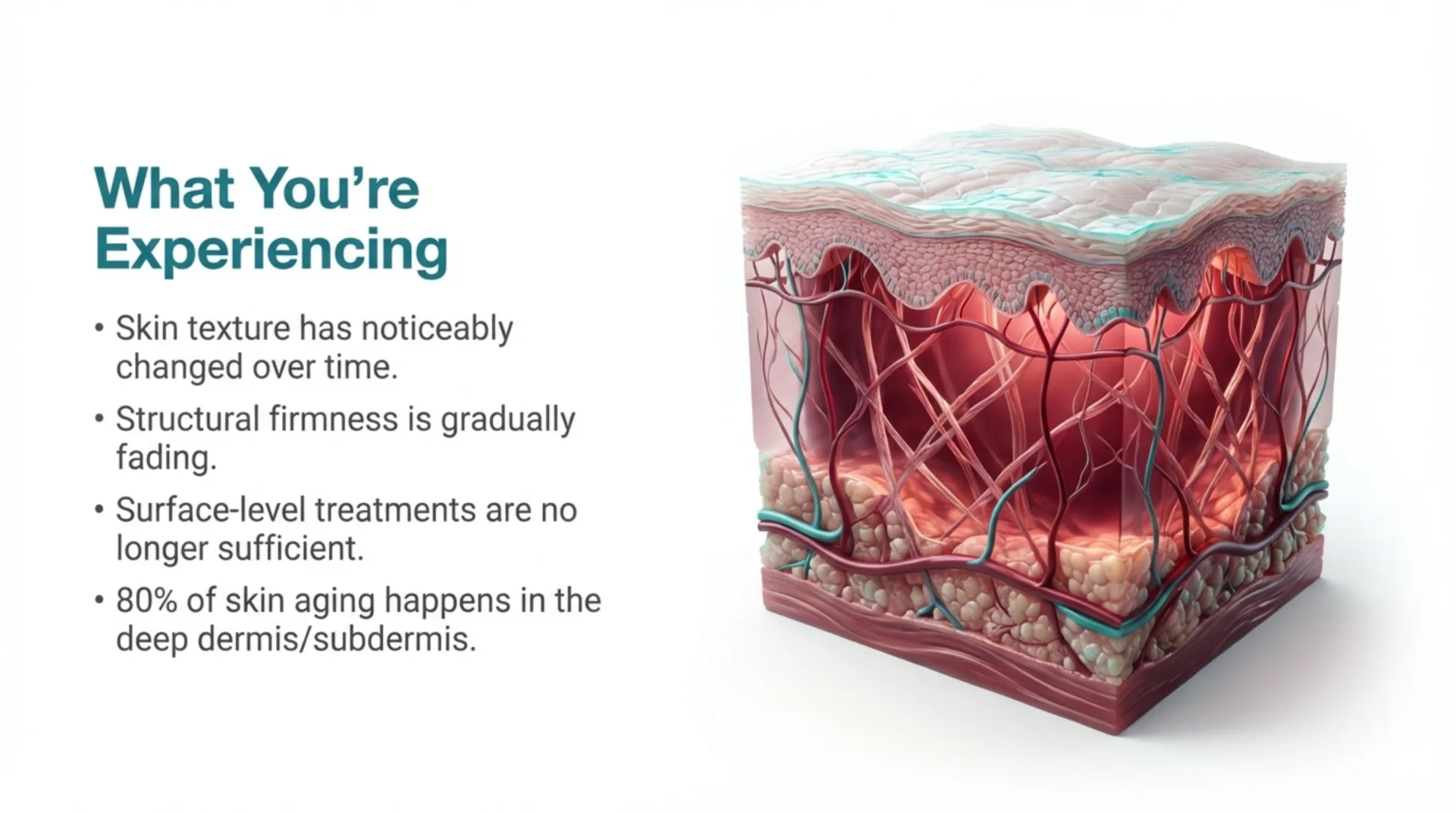
These changes creep up gradually — so gradual you almost don't notice until you do. The texture feels less smooth. The firmness you took for granted is somewhere in the past.
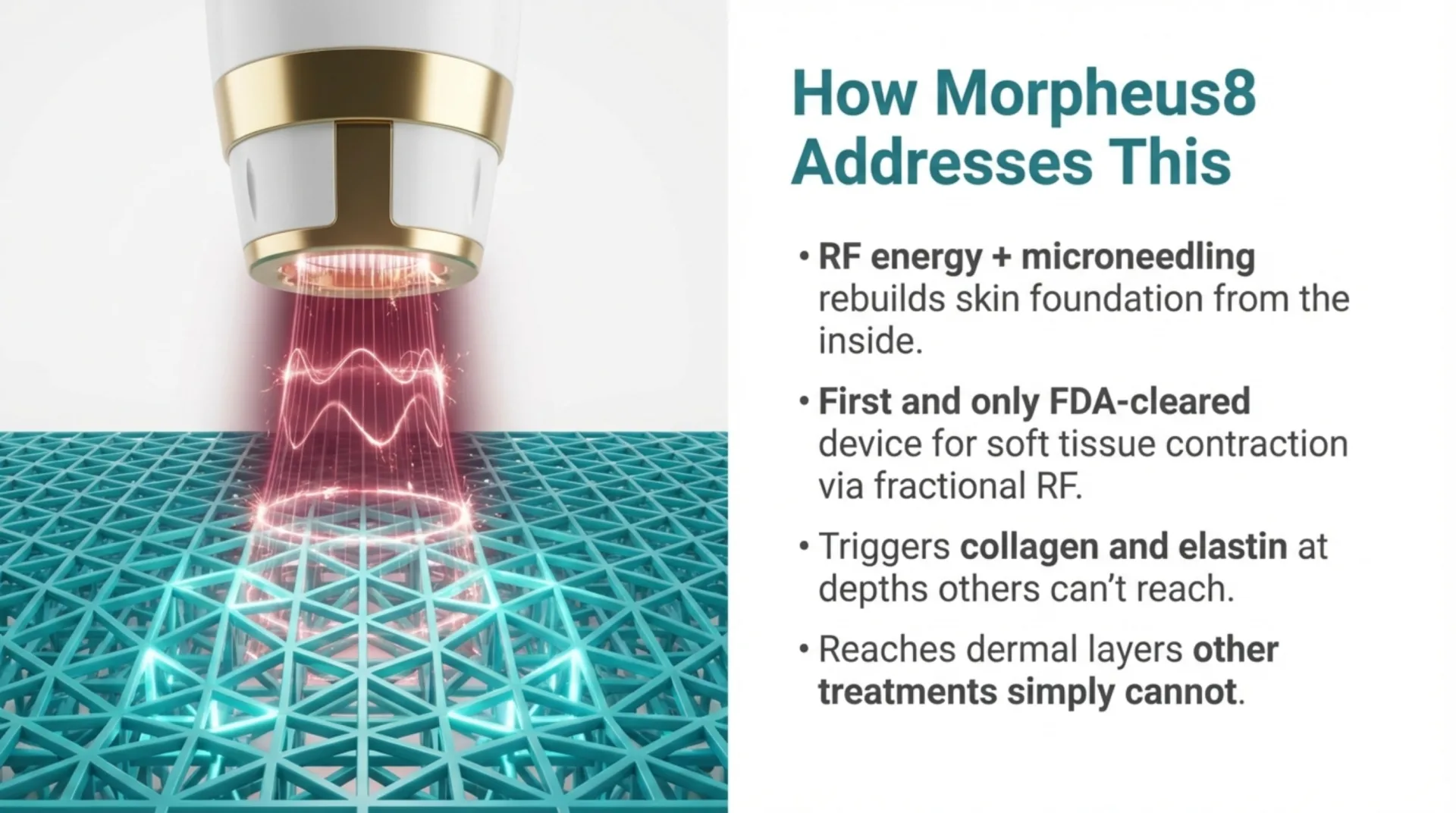
Morpheus8 works by using radiofrequency energy and microneedling to wake up your skin's healing response, gently rebuilding firmness and smoothness across your face, neck, and chest. At Zvia Weight Loss & MedSpa, we customize the treatment to your skin's exact needs — how deep, how intense, what areas matter most to you.

An 8-minute overview of how fractional RF microneedling triggers collagen rebuilding and what to expect from your treatment course.
What Is Morpheus8®?
Your skin tells a story. Over time, the bounce fades. Fine lines etch deeper. Texture becomes uneven. The firmness you once took for granted slips away. Creams promise a lot but deliver incremental change at best. You’re looking for something real — something that addresses what’s actually happening beneath the surface.
Morpheus8® by InMode® is an FDA-cleared fractional radiofrequency microneedling system that does exactly that. It combines bipolar RF energy with gold-coated microneedles to reach into the dermis and subdermis, prompting your skin’s own collagen and elastin production to rebuild firmness, smooth texture, and refresh your complexion from the inside out. The FDA first cleared the platform in 2019 for electrocoagulation and hemostasis in dermatologic and general surgical procedures 1, and in 2024 cleared the Morpheus8® 90 applicator for dermatologic procedures where coagulation or contraction of soft tissue is needed 2. Its facial applications have been described in the peer-reviewed dermatology literature 3.
How Does It Work?
Morpheus8® uses fractional RF microneedling — a technology that layers two powerful mechanisms to remodel skin at multiple depths simultaneously.
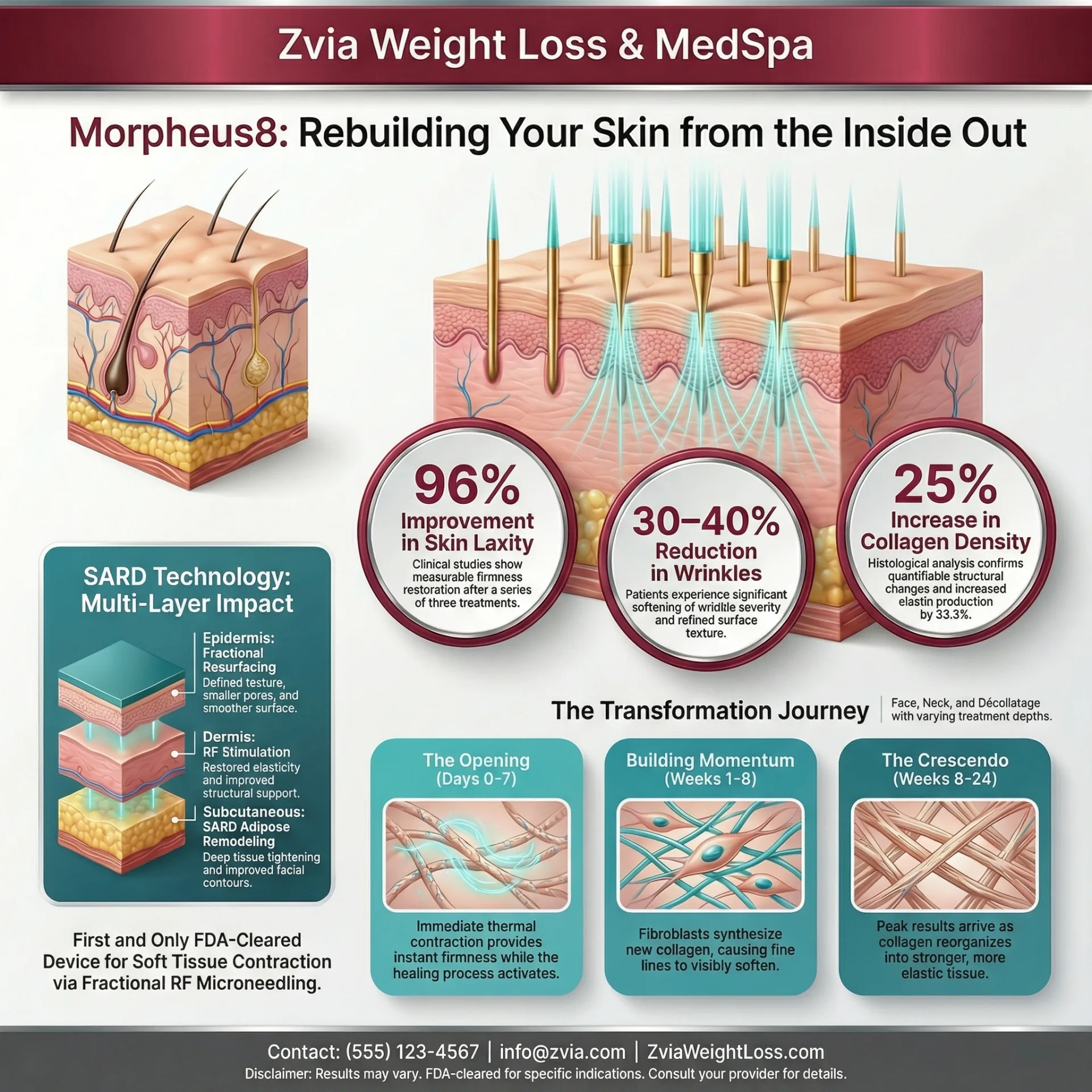
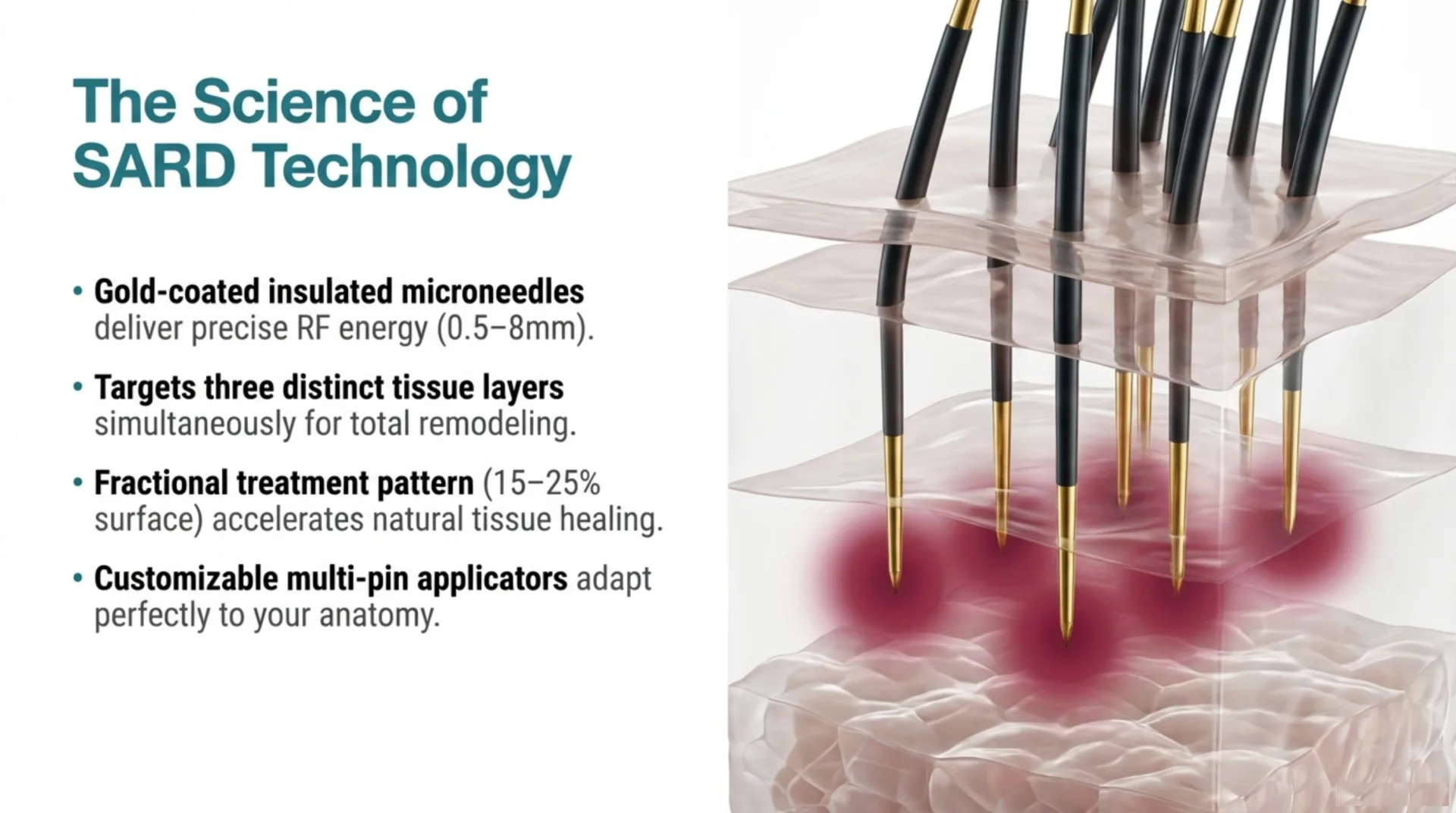
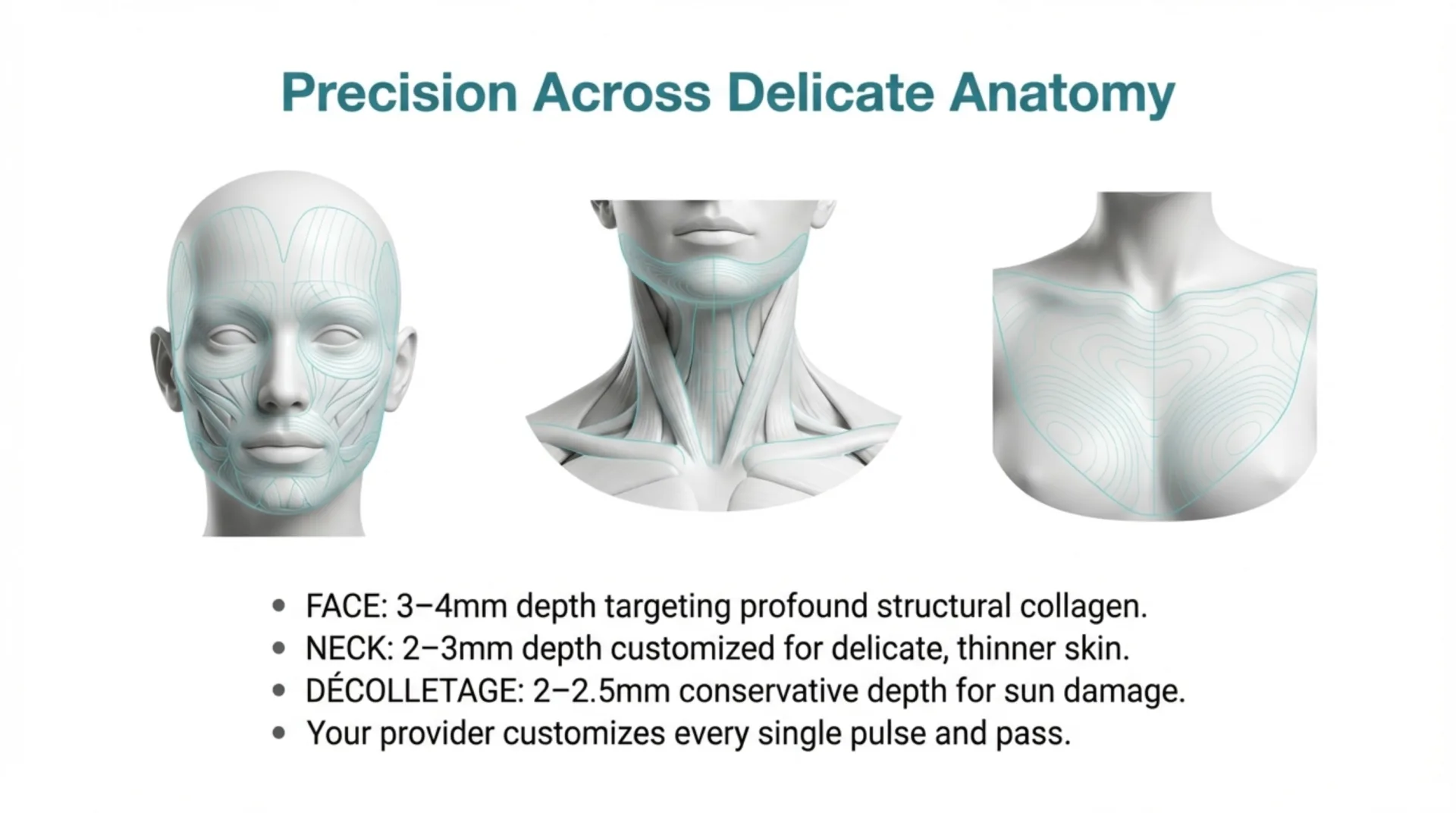
Here’s what happens: During treatment, the Morpheus8® handpiece uses insulated gold-coated microneedles to puncture the skin at precise depths (customized from 0.5 millimeters on the surface up to 4 millimeters for the face, adjusted by your provider based on skin type and area). The needles themselves are coated in gold to insulate the skin and channel the bipolar RF energy beneath the needle, not along the surface. This targeted delivery heats the dermal and subdermal layers without overheating the epidermis.
That RF energy triggers a three-level response the manufacturer describes as SARD (Subdermal Adipose Remodeling Device) technology 4:
-
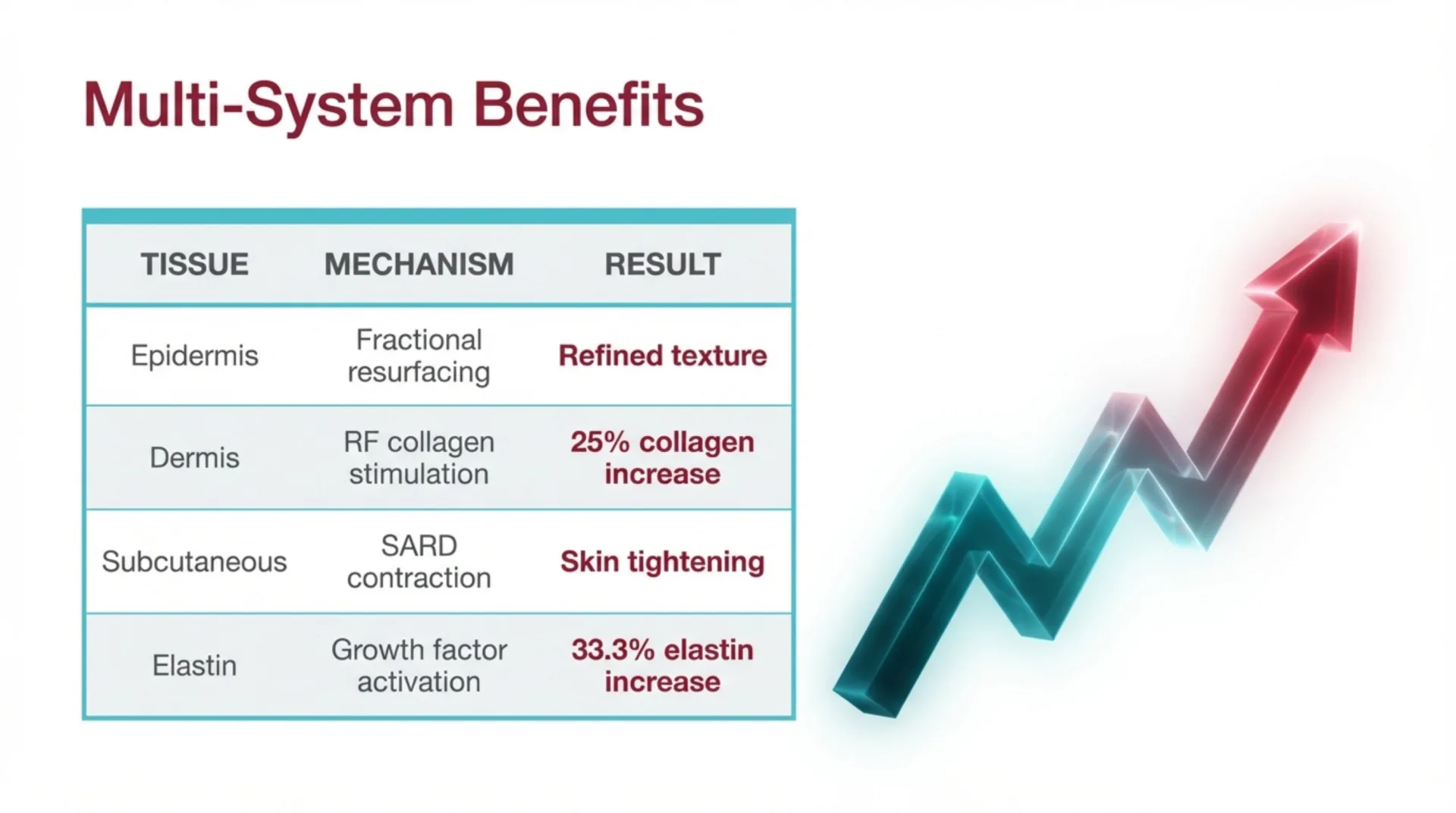
Epidermal resurfacing: The fractional needle pattern (treating 15–25% of the surface per pass) creates controlled micro-injuries that prompt healing and cellular renewal.
-
Dermal heating: RF energy heats collagen fibers, causing immediate contraction and triggering long-term collagen and elastin synthesis. Your body responds by rebuilding structural proteins over the following weeks.
-
Subdermal remodeling: Deeper RF penetration reaches fat compartments and connective tissue, tightening and restructuring support layers beneath the skin.
Your provider customizes three critical variables: needle depth (adjusted for facial anatomy, neck laxity, décolletage sensitivity), energy level (calibrated to your Fitzpatrick skin type to prevent complications like post-inflammatory hyperpigmentation), and the number of passes (typically 1–3, determined in real time based on tissue response). Morpheus8® offers three applicator options — the 12-pin Prime for sensitive areas, the 24-pin Standard for balanced coverage, and the 40-pin Body for larger treatment zones 4 — giving your provider precision at every step.
The result is fractional remodeling: structural change at depth, with less downtime than historically more invasive resurfacing approaches 3. The FDA’s 2024 clearance for the Morpheus8® 90 applicator covers dermatologic procedures where coagulation or contraction of soft tissue is needed 2 — regulatory language that names the mechanism directly.
One honest note about that, because the word “FDA-cleared” gets stretched a lot in this industry: a 510(k) clearance means the FDA determined the device is substantially equivalent to a device already legally on the market. It is a safety and equivalence pathway, not a head-to-head ranking against other systems and not a guarantee of any particular result. We’d rather you know exactly what the label says than be impressed by it.
What Are the Benefits of Morpheus8®?
Smoother Texture and Softer Lines A 2026 systematic review pooled 20 studies and 558 participants treated with RF microneedling and found consistent, statistically significant improvement in skin texture and skin tightening, supported by high Global Aesthetic Improvement Scale scores. Patient satisfaction exceeded 90% in most of the included studies 5.
What that review does not hand us is one tidy percentage for wrinkle reduction. The individual studies measured different things on different scales, and flattening them into a single headline number would be neater than it would be true. You have probably seen figures like “30 to 40% wrinkle reduction” quoted around this treatment. We looked for the study behind that number and could not find one, so we are not going to repeat it. We would rather set honest expectations than have you measure your results against someone else’s brochure.
Restored Skin Firmness Laxity is one of the hardest changes to reach with anything topical, and we know how frustrating that is. Morpheus8® works at the level where firmness actually lives. In the largest published series of this technology — a multicenter review of 247 patients — skin laxity improved by an average of 1.4 points on the Baker Face/Neck scale, and 93% of patients said they were pleased with their results and would choose the procedure again 6.
That series deserves one piece of context, because it matters: those patients were treated with bipolar RF and fractional RF in combination, almost all under local anesthesia 6. It is the best laxity evidence this technology has, and it is not a one-to-one stand-in for a Morpheus8® session on its own. Your own result depends on your skin, your history, and your provider’s judgment, and we’ll talk through what’s realistic for you before we begin.
Pore Refinement, Scarring, and Sun Damage Beyond firmness, fractional RF microneedling has been described in the dermatology literature for acne, scarring, and general facial rejuvenation, with reduced downtime compared to historically more invasive procedures 3. Enlarged pores and rough, uneven texture often improve as collagen rebuilds.
Collagen and Elastin Rebuilding There is histologic evidence for the mechanism, and it’s worth being precise about how much. In a small pilot study, biopsies from four patients taken four weeks after a single RF macroneedling treatment all showed increases in collagen, elastin, fibroblasts, and vasculature, along with fewer inflammatory cells. Among the younger subjects in that group, collagen density rose roughly 25% and elastin density roughly 33.3% 7.
Four patients is a pilot, not a population. We cite it because it shows the mechanism is real at the tissue level — your skin is being structurally remodeled, not just temporarily swollen — but a study that size cannot tell you the size of the change you’ll personally see.
Considered Across Skin Types The gold-insulated needle design limits unwanted surface heating, and your provider adjusts depth and energy to your Fitzpatrick skin type to reduce the risk of post-inflammatory hyperpigmentation 4. One label detail worth knowing if you have deeper skin: the FDA-cleared labeling for these applicators states that at energy levels above 62 mJ/pin, use is limited to Fitzpatrick skin types I–IV 12. Morpheus8® can be and is used across a broad range of skin tones, but the higher-energy settings carry that restriction, and honoring it is part of treating deeper skin safely. Your provider will talk you through the settings appropriate for your skin.
How Long Results Last This is the question we get most, and it’s the one the evidence answers least well. The 2026 systematic review synthesized aesthetic outcomes, safety, tolerability, and satisfaction 5 — it does not establish how long results endure. When you see a confident “12 to 18 months” quoted around this treatment, we can’t point you to a study behind it, so we won’t quote it either.
Here’s what we can say honestly: collagen remodeling is a genuine structural change rather than a temporary tightening, and it is also subject to the same aging and sun exposure that brought you in. Most people plan on periodic maintenance. Your provider will help you decide what that looks like based on how your skin actually responds, not on a number printed in advance.
How Long Does Morpheus8® Take to Work?
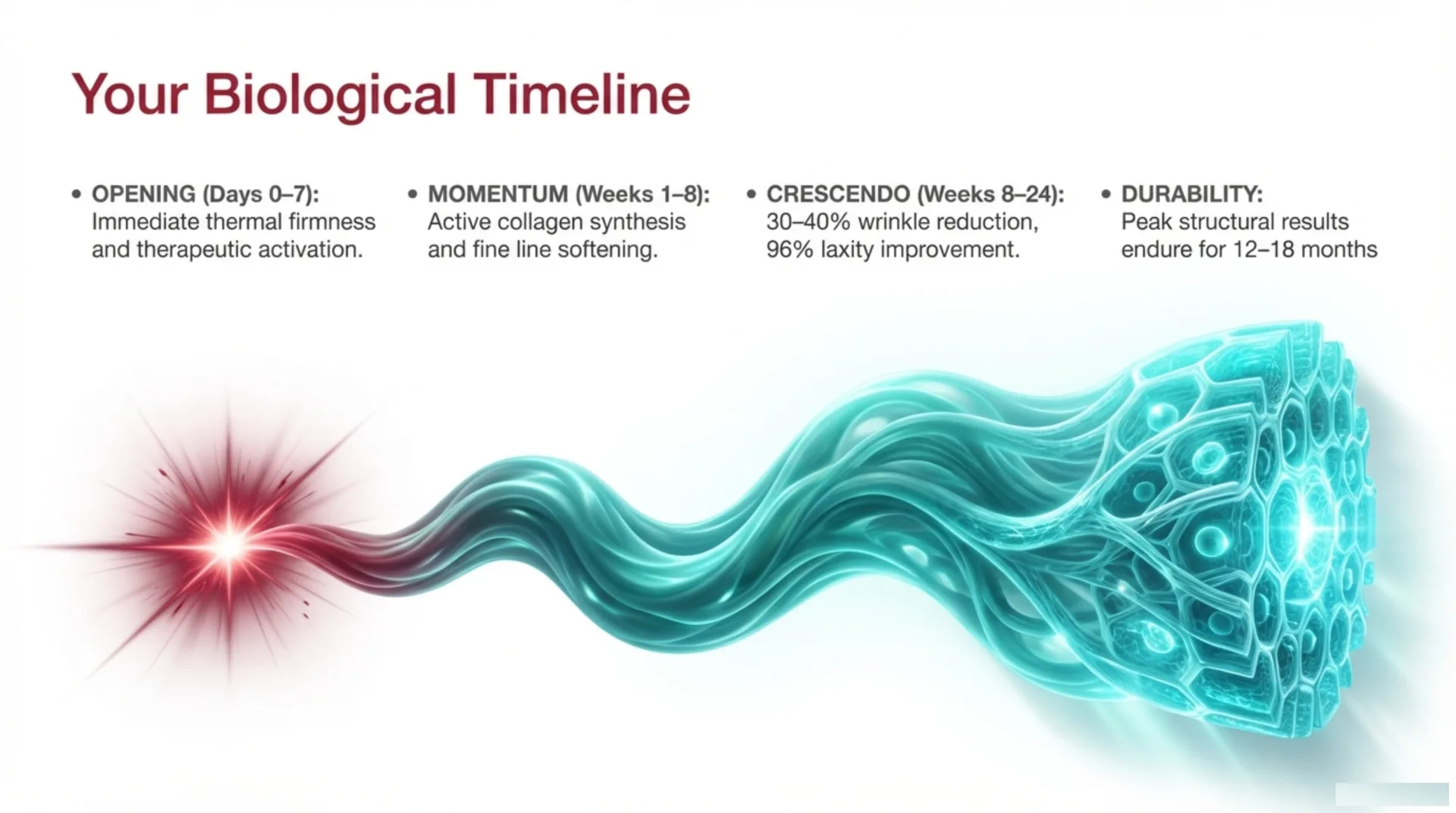
Results unfold in three distinct phases across your treatment course (typically three sessions, spaced 4–6 weeks apart).
The Opening (Days 0–7) Immediately after your first session, you’ll feel tightness and warmth — the RF-induced collagen fiber contraction kicking in. You’ll notice some immediate firmness. This initial effect is real but temporary, a preview of what’s to come. Within 48 hours, redness and mild swelling peak, then begin to settle. By day 7, most visible inflammation resolves, though your skin is actively rebuilding beneath the surface.
Building Momentum (Weeks 1–8) This is when collagen and elastin synthesis accelerates. Fine lines typically soften. Texture tends to improve week to week. If you’re receiving a second session (typically at week 4–6), your skin’s collagen production is already engaged when fresh microneedling prompts another round of healing and synthesis. The histology supports what’s happening underneath: biopsies taken four weeks after a single treatment showed increased collagen, elastin, and fibroblasts, though that study followed only four patients 7. What you’ll notice is less a number than a gradual change in how your skin looks and feels.
The Crescendo (Weeks 8–24) Collagen remodeling reaches its peak and results typically become most apparent. On the face, peak improvement usually arrives around week 12–16. The neck, being thinner and more mobile, may reach peak results week 12–20. The décolletage, more sun-exposed and with a thinner dermis, may take until week 16–24 to fully demonstrate collagen remodeling. From there results tend to plateau. How long that plateau holds varies from person to person, and as noted above, we don’t have durability data we can honestly quote you — so your provider will reassess with you at that point rather than putting a maintenance schedule on the calendar in advance.
Timeline Note: Individual results depend on baseline skin condition, age, sun history, skincare consistency, and genetics. Some patients see wrinkle softening by week 4; others show most change after session two or three. Your provider will assess your specific response and adjust timing accordingly.
Is Morpheus8® Right for You?
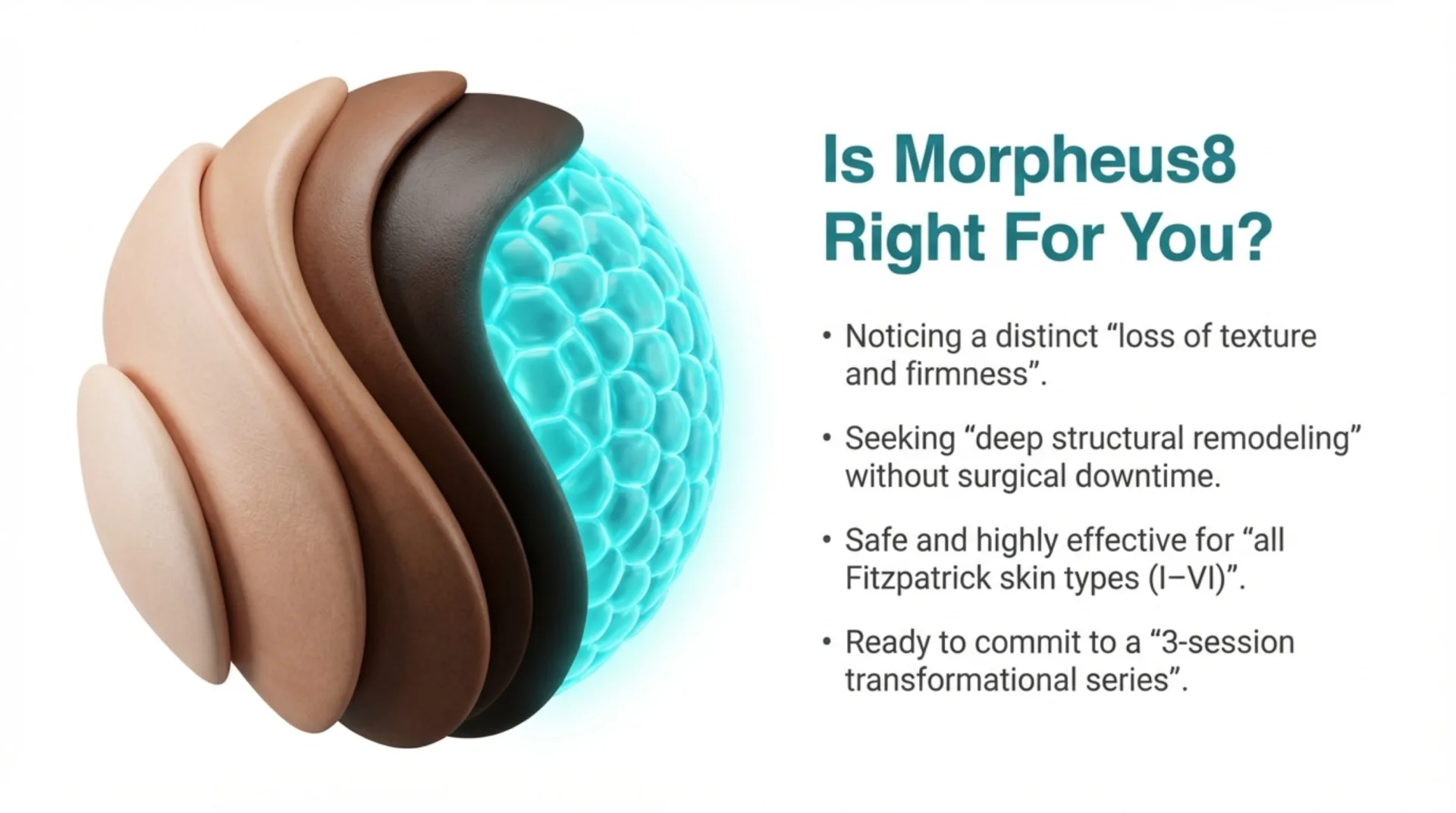
Morpheus8® works best for patients who recognize the shift in their skin and want to address it directly. You’re likely an ideal candidate if:
- Age range: 35–70, though results depend more on skin condition than chronological age
- Concerns: Fine to moderate lines, loss of firmness, uneven texture, enlarged pores, acne scars, or sun damage
- Skin type: A broad range of Fitzpatrick types can be treated with customized provider settings 4, with the labeled energy restriction above 62 mJ/pin for types V–VI kept in mind 12
- Mindset: You prefer a customizable, science-backed approach over permanent procedures and understand that results take weeks to fully materialize
This procedure appeals to two distinct groups. Relief Seekers are those who’ve watched their skin change and want to reclaim the firmness and clarity they had. Morpheus8® gives them that back. Optimization Pursuers are maintaining good skin and want to stay ahead of aging — using Morpheus8® as a proactive maintenance tool.
Who should not pursue Morpheus8®: Anyone pregnant or nursing, those with active infections or open wounds in treatment areas, patients with pacemakers or other electrical implants, or anyone who’s taken isotretinoin (Accutane) within the past 6 months. Uncontrolled diabetes and severe keloid tendency also warrant careful provider discussion. Your provider will evaluate your full medical history as a partnership — not as a gatekeeper, but as an expert ensuring safety and optimization.
What Does a Morpheus8® Treatment Involve?
Morpheus8® is a commitment, but a manageable one. The full protocol spans about 12–16 weeks from first session to peak results, with realistic downtime and straightforward aftercare.
Pre-Treatment Preparation (1–2 weeks prior) Hold retinoids, acids, and vitamin C products to avoid compounding skin sensitivity. Avoid NSAIDs and blood thinners if possible (discuss with your provider). Arrive with clean, unmedicated skin.
The Session Itself Your provider applies topical anesthetic 45–60 minutes before treatment, allowing time for deep numbing. The actual Morpheus8® treatment takes 45–60 minutes for a full face, neck, and décolletage session. Your provider selects the appropriate applicator (likely the 24-pin Standard for this combined area), customizes needle depth per zone (0.5–2.5mm for face, slightly shallower for neck, minimal for décolletage), and delivers 1–3 passes based on real-time tissue assessment. You’ll feel pressure and warmth but minimal sharp pain thanks to anesthetic. Some patients report a mild crackling sensation as the RF energy fires — this is normal.
Area-Specific Variations:
- Face: Tolerates deeper penetration (up to 4mm); 24-pin applicator standard; 1–3 passes typical
- Neck: Thinner skin, more mobile; slightly shallower depth (1.5–3mm); 2 passes common
- Décolletage: Most sun-exposed, thin dermis; shallowest settings (0.5–2mm); gentle technique; 1–2 passes
Post-Treatment Care Timeline:
Days 0–2 (Acute phase): Redness and swelling peak around hour 6–12. Gentle cleanser, hydrating serum, sunscreen only. No actives, no makeup, no exercise. Sleep elevated if possible.
Days 3–7 (Healing phase): Redness fades to pink. You may experience light peeling (normal — collagen remodeling). Continue gentle care. SPF 50+ is non-negotiable; sunburn will degrade results. Light activity (walking) is fine; avoid intense cardio and sweating.
Day 8 onward (Integration phase): Resume normal skincare including retinoids. Return to regular exercise. Continue SPF 50+ for 4 weeks minimum. By week 2–3, your skin looks and feels normal again.
Downtime Realistic Expectations:
- Face only: 1–3 days of visible redness
- Face + neck: 3–5 days to feel comfortable in social/professional settings
- Face + neck + décolletage: 5–7 days recommended before major events (three-zone treatment involves more total area and typically more visible inflammation)
Treatment Cadence: Three sessions, spaced 4–6 weeks apart. Your provider may adjust based on your skin’s response. Most patients schedule: session 1 (baseline), session 2 at week 5, session 3 at week 10. Peak results arrive 12–16 weeks post-session-one.
Lifestyle Integration: Hydration supports collagen synthesis — drink consistently. Protein-rich nutrition provides amino acid building blocks. Sleep matters (growth hormone peaks during deep sleep). SPF 50+ mineral sunscreen prevents UV damage from unraveling collagen work. If you smoke, discuss with your provider — nicotine constricts blood flow and slows healing.
Why Choose Zvia for Morpheus8®?
Technology is only as good as the hands wielding it. Morpheus8® is a sophisticated platform, but results depend entirely on provider expertise.
At Zvia Weight Loss & MedSpa in Lakewood, Colorado, your provider does real-time tissue assessment. What sets our Morpheus8® results apart is that we adjust depth and energy based on how your skin is responding in the moment — not a preset template. They read your skin’s response during treatment, adjusting depth and energy in response. They understand Fitzpatrick mastery — how to customize settings for your specific skin type to maximize results and minimize risk. They spend time. They ask questions about your goals. They’re not rushing through a protocol; they’re individualizing one.
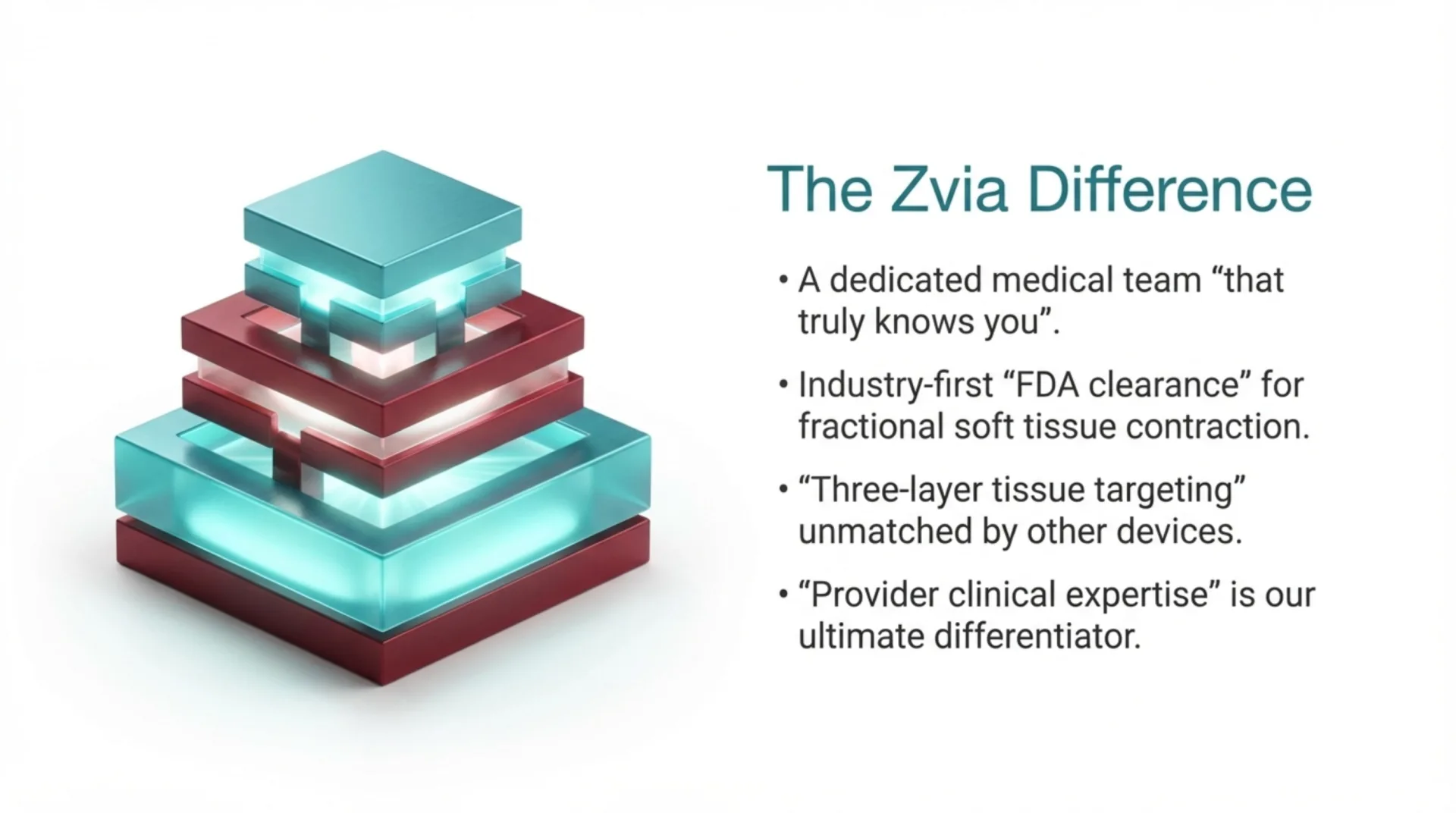
Morpheus8®’s technology foundation — multi-level tissue targeting, fractional RF delivery through insulated gold-coated needles 4, and FDA clearance for dermatologic procedures requiring coagulation or contraction of soft tissue 2 — sets the stage. But your provider’s judgment in applying that technology is what turns capability into results. That’s the Zvia difference.
Continue exploring
Evolve X Transform: Non-Invasive Body Contouring That Works With Your Effort
How Evolve X Transform pairs radiofrequency with electrical muscle stimulation for non-invasive abdominal contouring — what the published evidence shows, what it doesn't, and how Zvia Weight Loss & MedSpa in Lakewood, CO sets expectations.
BOTOX®: The Gold Standard in Neuromodulation
A provider's guide to BOTOX® (onabotulinumtoxinA) — how it works, what it treats, and what to expect from treatment at Zvia Weight Loss & MedSpa in Lakewood, CO.
Educational purposes only. Provider-supervised protocols required. Results may vary based on individual biological response.
Discuss whether Morpheus8 is right for you with our clinical team.
References
- 1. U.S. Food and Drug Administration; InMode MD Ltd. 510(k) Premarket Notification K192695 — InMode System with the Morpheus8 (Fractora) Applicators . FDA 510(k) Premarket Notification Database (2019).
- 2. U.S. Food and Drug Administration; InMode Ltd. 510(k) Premarket Notification K240017 — InMode System with the Morpheus8 90 Applicator . FDA 510(k) Premarket Notification Database (2024).
- 3. Hendricks AJ, Farhang SZ Dermatologic facial applications of Morpheus8 fractional radiofrequency microneedling . Journal of Cosmetic Dermatology 21(Suppl 1) , S11-S19 (2022).
- 4. InMode Aesthetic Solutions Morpheus8 Workstation — Device and Applicator Specifications . Manufacturer product documentation (2024).
- 5. Kumar N, Suh DH, Lee SJ, Kasif SA, Carruthers JDA Radiofrequency Microneedling for Facial Rejuvenation: A Systematic Review . Journal of Cosmetic Dermatology 25(4) , e70845 (2026).
- 6. Dayan E, Rovatti P, Aston S, Chia CT, Rohrich R, Theodorou S Multimodal Radiofrequency Application for Lower Face and Neck Laxity . Plastic and Reconstructive Surgery - Global Open 8(8) , e2862 (2020).
- 7. Flegontova E, Kreindel M, Vranis NM, Mulholland RS Correction of age-related changes in the skin at the dermal and subdermal level using radiofrequency macroneedling therapy . Journal of Cosmetic Dermatology 23(7) , 2401-2410 (2024).