When Your Face Tells a Story You Did Not Write
You catch your reflection and see someone who looks tired, stressed, maybe even frustrated. But that is not how you feel. Those lines settled in gradually — across your forehead, between your brows, fanning out from the corners of your eyes — and now they speak before you do.
You do not want to look different. You just want your outside to match what is happening on the inside.
BOTOX® is an FDA-approved neurotoxin treatment that precisely relaxes the muscles creating dynamic wrinkles across your face and neck. Your Zvia provider customizes every injection to your anatomy, your expression patterns, and your goals — so you still look like you, just rested and refreshed.
Here is how it works, what to expect, and what your treatment journey could look like.


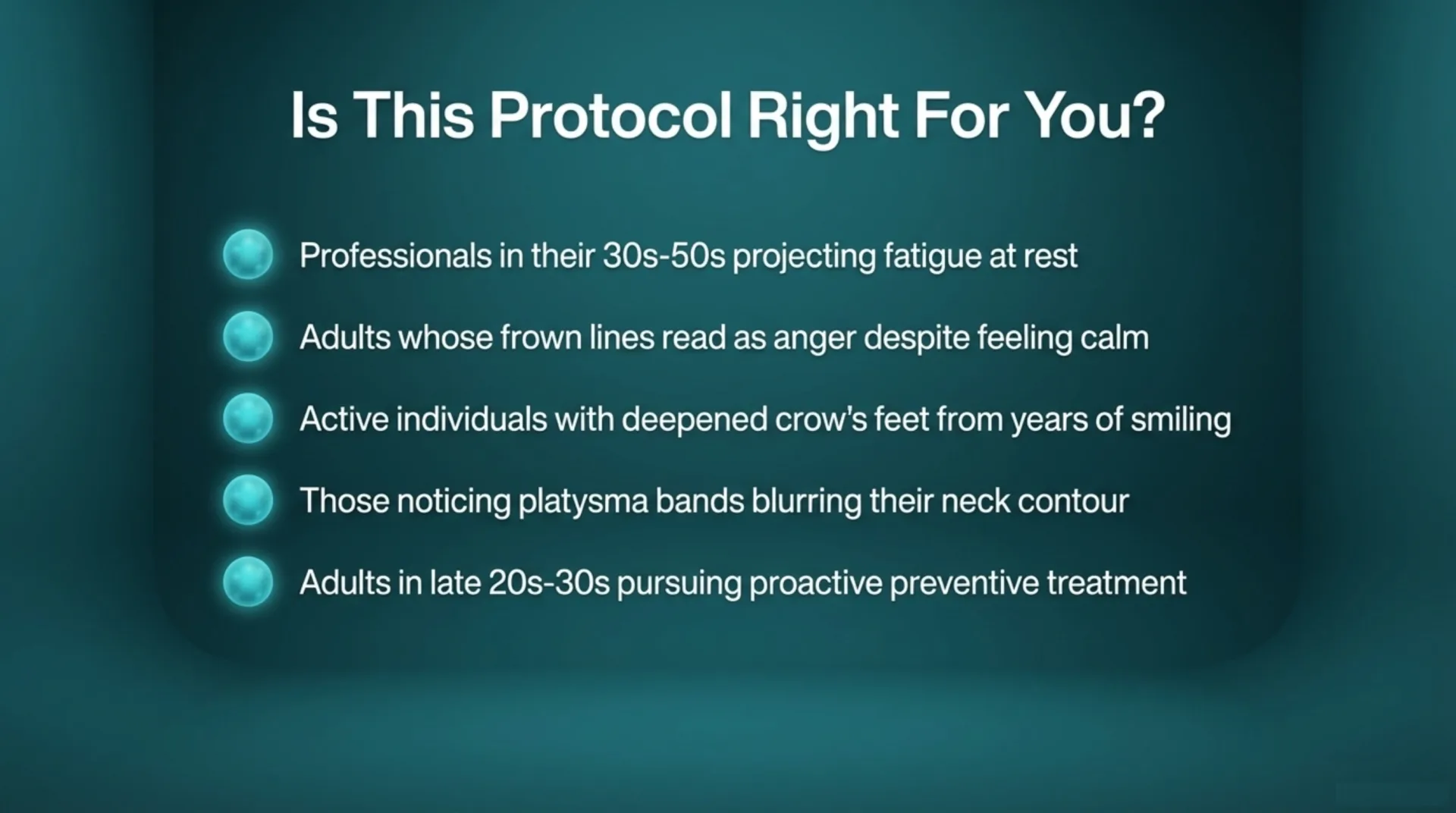
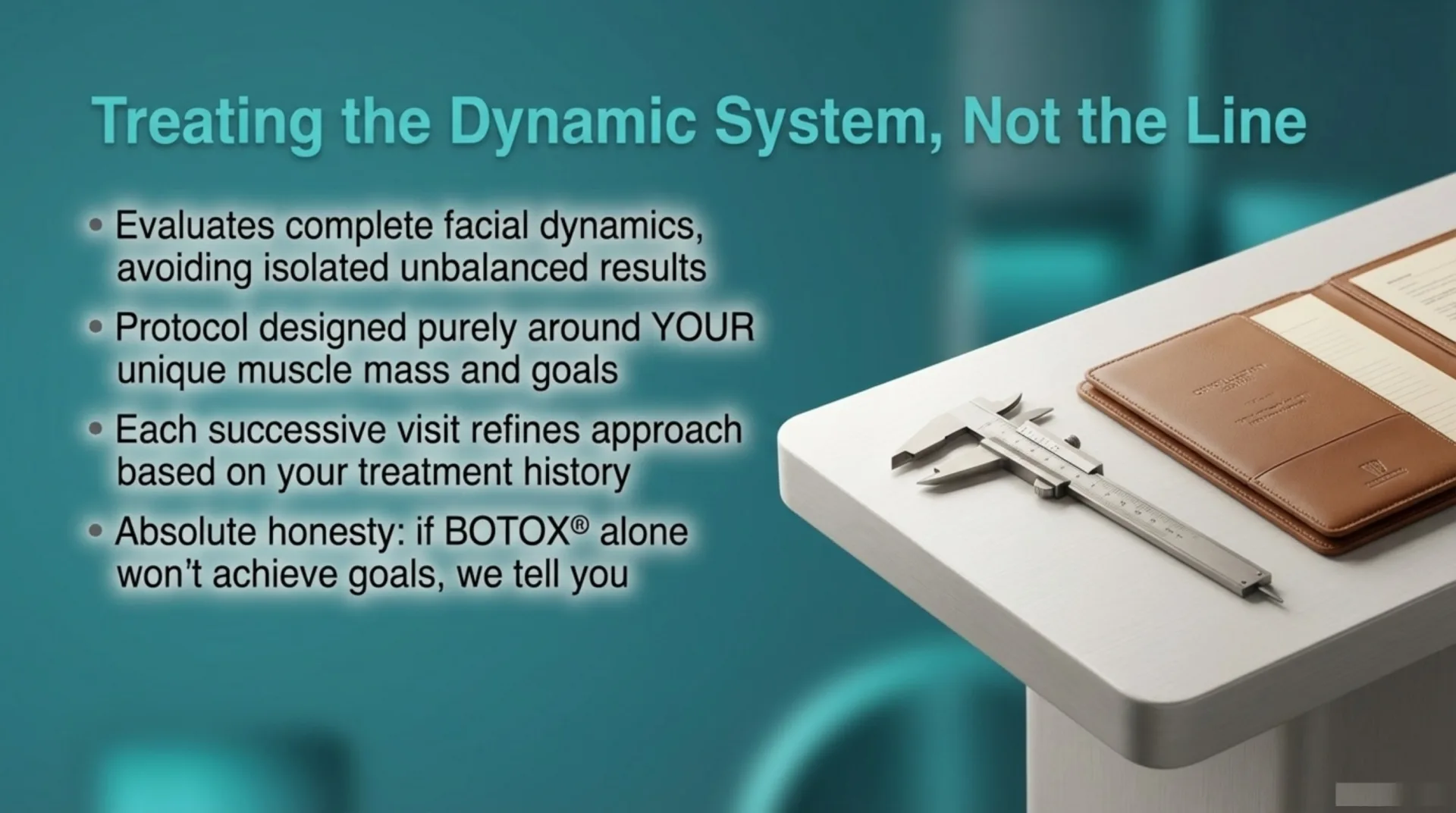
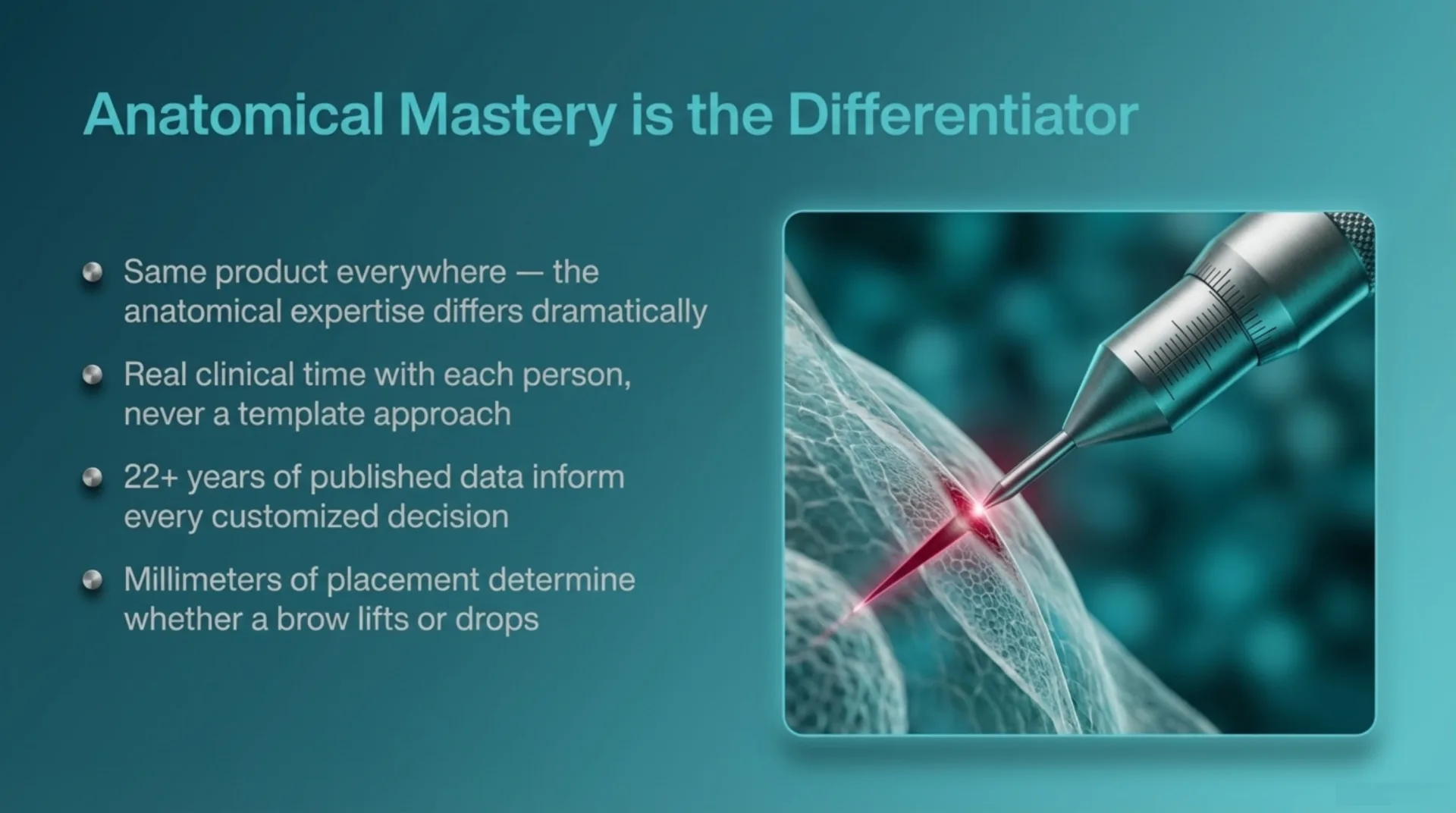

Audio overview of BOTOX® (onabotulinumtoxinA) — how it works, FDA-approved indications, the treatment timeline, and why provider skill matters.
What Is BOTOX®?
You see it every morning. Lines across your forehead that were not there five years ago. A crease between your brows that makes you look frustrated even when you are perfectly relaxed. Crow’s feet that used to appear only when you laughed but now seem etched in place. Maybe vertical bands along your neck that add years you do not feel. The serums and skincare routines help with texture and tone, but dynamic lines driven by muscle movement need a different approach entirely.
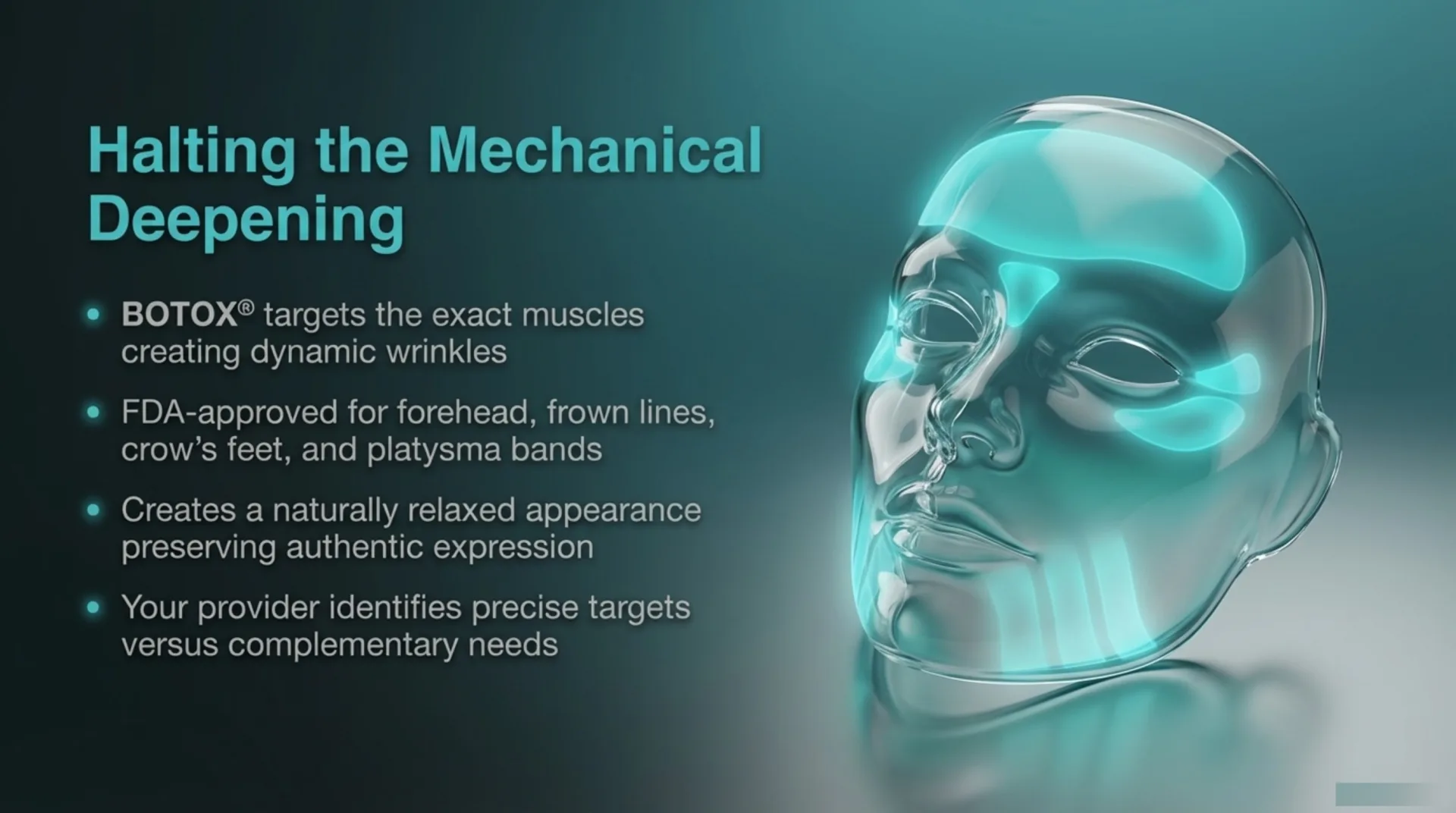
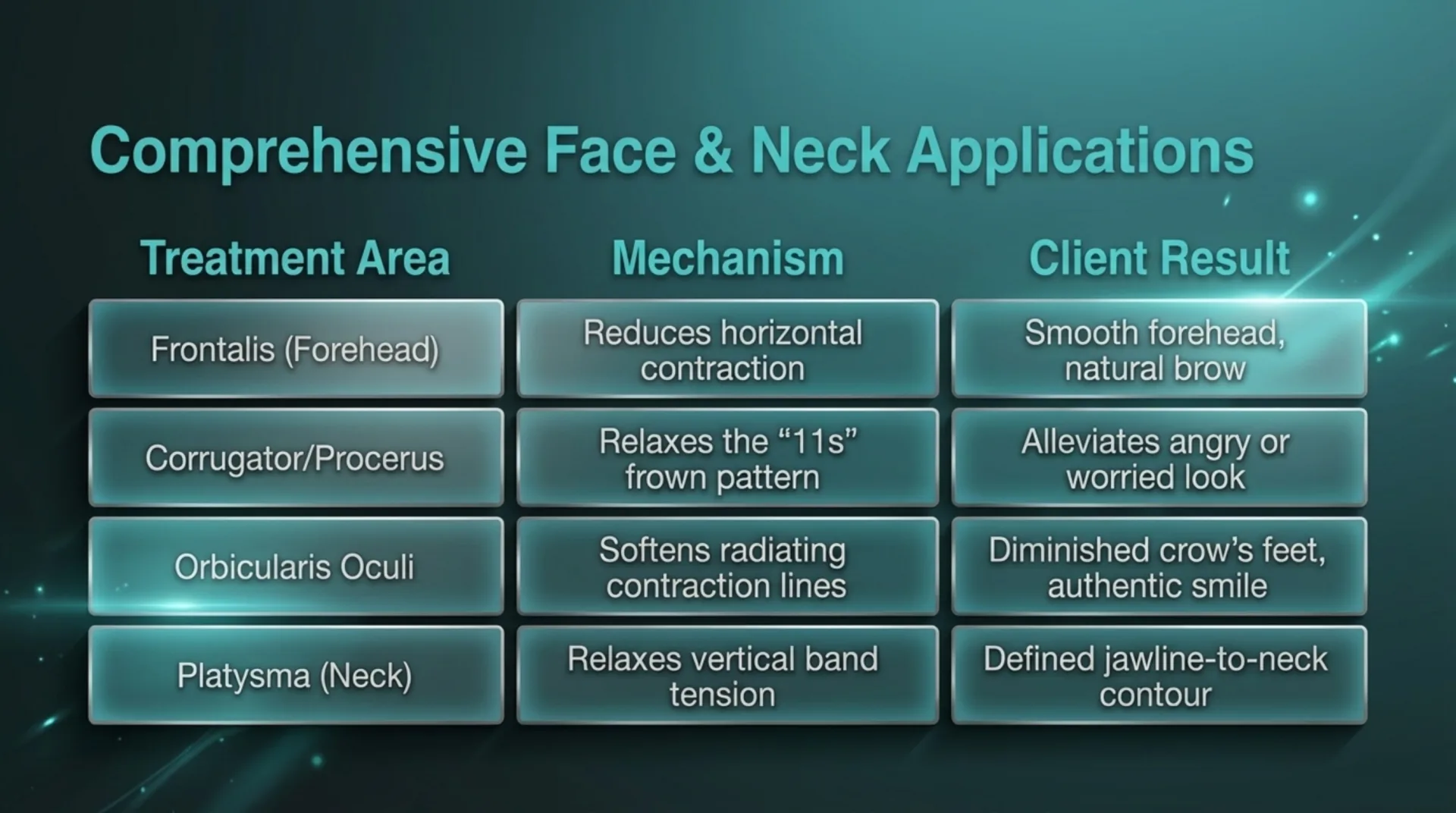
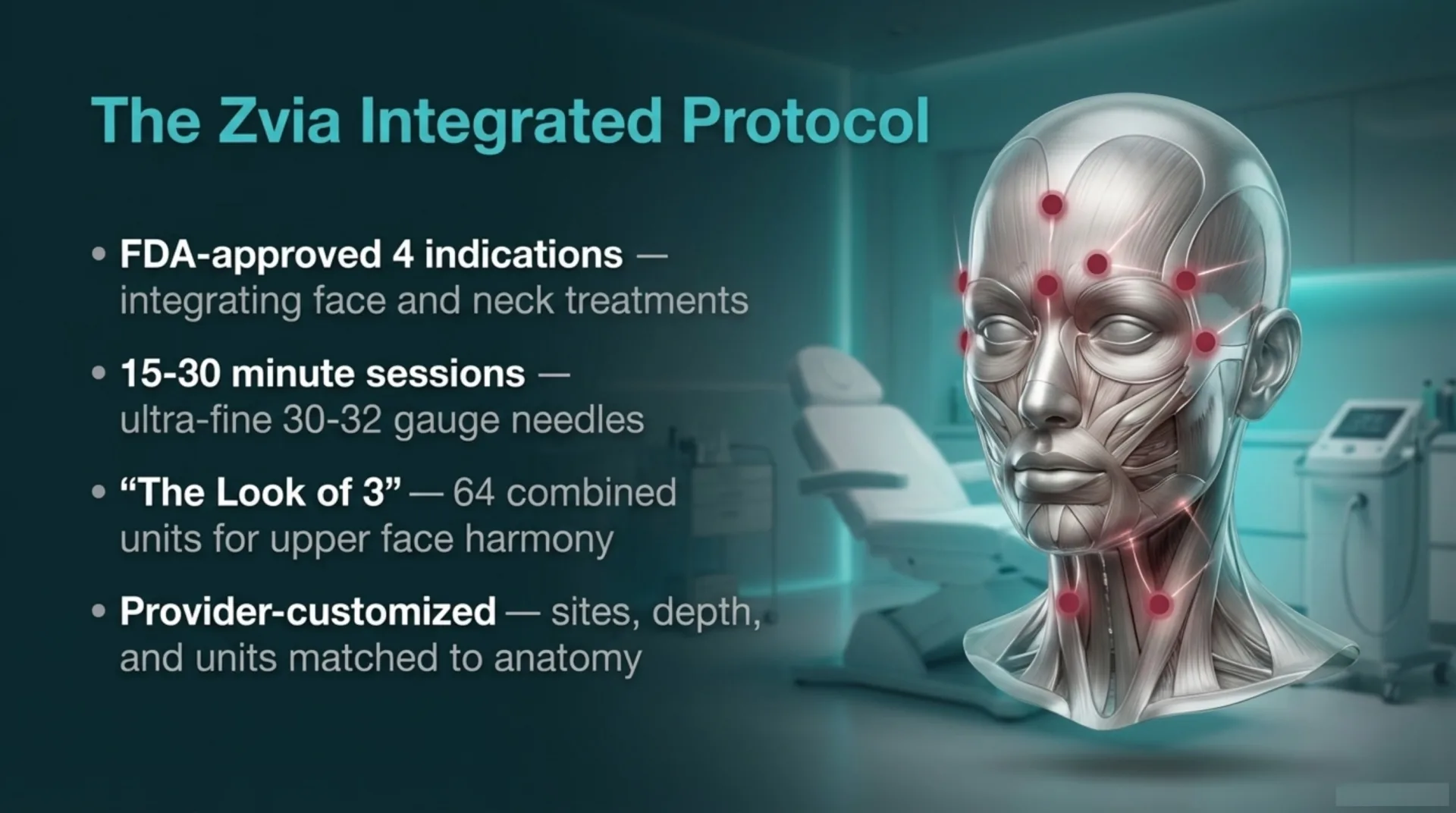
BOTOX® (onabotulinumtoxinA, botulinum toxin type A) is an FDA-approved neurotoxin injectable manufactured by Allergan Aesthetics, a division of AbbVie. It works by temporarily reducing the muscle contractions that create dynamic wrinkles — the lines that form when you squint, frown, or raise your eyebrows. BOTOX® is currently FDA-approved for four cosmetic indications: moderate to severe forehead lines, frown lines (glabellar lines), crow’s feet (lateral canthal lines), and platysma bands in the neck 1.
With over 22 years of clinical use since its initial cosmetic approval for glabellar lines 4 — and, by the manufacturer’s own count, 574 peer-reviewed articles documenting its safety and efficacy 3 — BOTOX® remains one of the most extensively studied aesthetic treatments in the world. Its newest FDA-approved indication — treatment of moderate to severe platysma bands — was granted in October 2024, making it the first and only aesthetic neurotoxin approved for a neck indication 2.
How Does It Work?
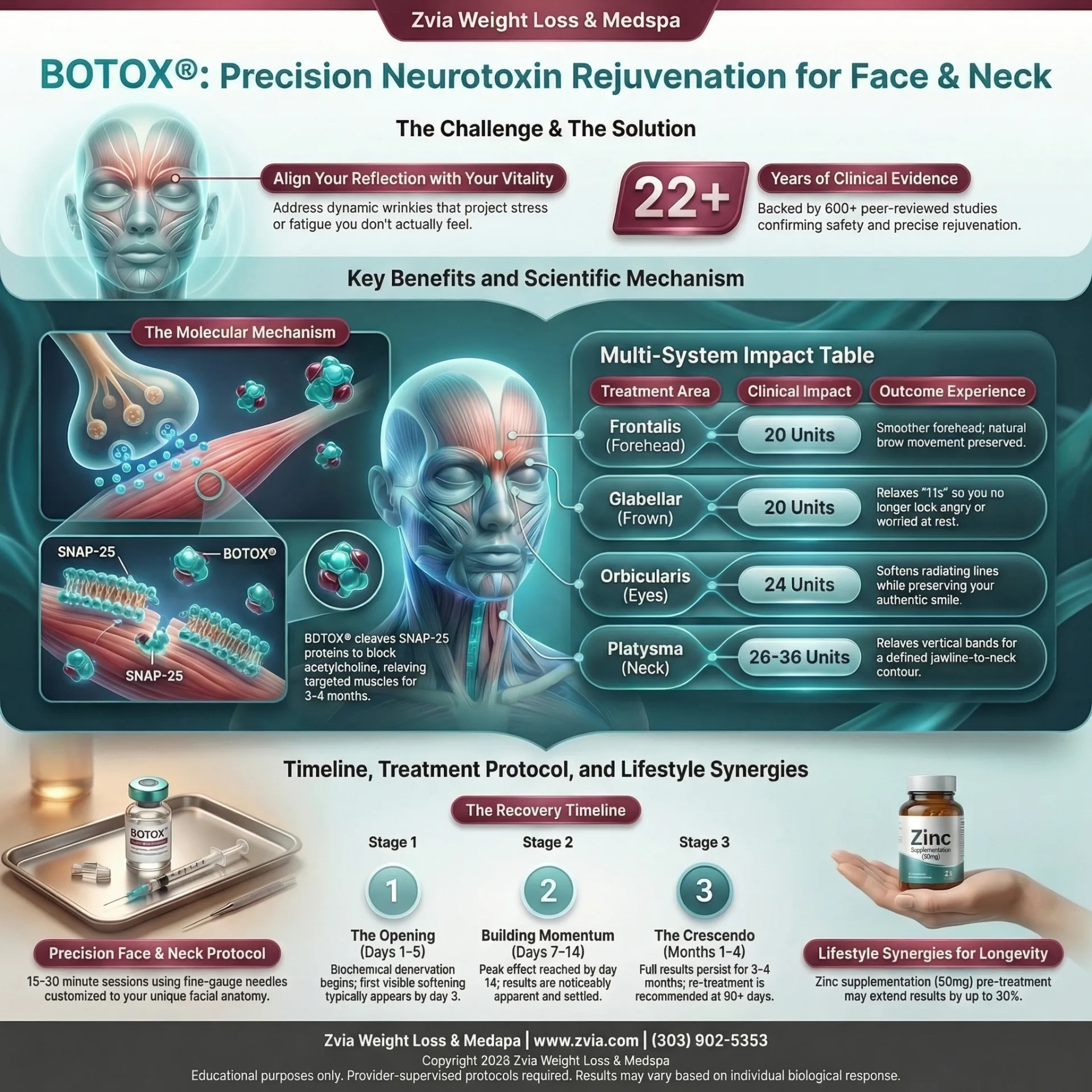
At the neuromuscular junction — where a motor nerve terminal communicates with a muscle fiber — onabotulinumtoxinA targets a protein called SNAP-25, a critical component of the SNARE complex that fuses acetylcholine-containing vesicles with the nerve terminal membrane 5. By cleaving SNAP-25, BOTOX® prevents the vesicle fusion required for acetylcholine release. Without that chemical signal reaching the muscle fiber, the targeted muscle temporarily reduces its contractions.
This is why the lines that appear when you frown or squint gradually smooth out after treatment. The muscle has not been removed or damaged — it simply receives fewer signals to contract with full force. The wrinkle-forming movement softens, and the skin overlying those muscles recovers from years of repetitive folding. The effect is targeted and temporary: only the injected muscles are affected, and normal function returns over three to four months as the nerve terminal regenerates SNAP-25 proteins and forms new synaptic connections 5.
Research has also identified that onabotulinumtoxinA influences sensory nerve pathways, modulating neuropeptide release including substance P and CGRP 5. These sensory mechanisms contribute to therapeutic applications beyond aesthetics, including chronic migraine.
What Are the Benefits of BOTOX®?
Natural-Looking Relaxation of Dynamic Wrinkles
BOTOX® addresses lines caused by repeated muscle movement — forehead creases, frown lines, crow’s feet. When administered with precision, the result is a face that looks rested and refreshed, not immobile. The goal is never to eliminate expression but to soften the patterns that make you look tired, stressed, or older than you feel. FDA-approved dosing includes 20 units for forehead lines, 20 units for frown lines across five injection sites, and 24 units (12 per side) for crow’s feet 1.
FDA-Approved Neck Rejuvenation
The October 2024 FDA approval for platysma bands makes BOTOX® the first neurotoxin approved for a neck aesthetic indication 2.
Here is what the trials behind that approval actually found, because it is rarely the number you see quoted. The primary endpoint was demanding: a band graded minimal or mild and at least a two-grade improvement, confirmed independently by both the treating investigator and the patient, at day 14. Thirty-two percent and 31% of treated patients cleared that bar across the two studies, versus 2% and 0% on placebo. Judged by the investigator alone, 45% and 42% did 1. On satisfaction, 65% and 62% of treated patients reported being satisfied or very satisfied with the effect on their neck bands at day 14, compared with 12% on placebo in both studies 1.
Those are real, statistically robust improvements — and they are not “almost everyone.” We would rather set honest expectations than have you measure your results against someone else’s brochure. At 26, 31, or 36 units depending on how many bands you have on each side 1, platysma treatment addresses the vertical cords that become more prominent with age, refining the jawline-to-neck transition.
Preventive Potential for Younger Adults
Consistent BOTOX® treatment does more than address existing lines. Reducing the repetitive contractions that fold the skin is the rationale for treating early, before dynamic lines — visible only during expression — settle into static creases that stay put at rest.
We want to be straight with you about how strong that evidence is. What the long-term data show is that repeated treatment keeps working rather than wearing out: in a real-world series of 50 patients followed across 1,098 injection cycles over roughly 15 years, there was no evidence of treatment failure or of results lasting less time 4. What has not been done is a trial that follows two matched groups for decades to prove that starting earlier prevents lines from forming. Adults in their late twenties and thirties who notice early lines during expression often choose this proactive approach on the strength of the mechanism, and that is a reasonable choice — just not a guaranteed one.
Established Safety Profile
BOTOX® has one of the most extensively documented safety profiles in aesthetic medicine. That same long-term study — 50 patients, 1,098 treatment cycles, cumulative doses reaching 3,684 units — recorded adverse events in 2.18% of cycles, all transient and none serious 4. A 2024 systematic review of aesthetic and therapeutic applications reached the same broad conclusion: complications are uncommon 6. Adverse effects that do occur generally appear within the first few days and resolve on their own, and repeated cosmetic injection has not been associated with cumulative harm 7.
Customizable, Provider-Directed Treatment
No two faces move the same way. Your provider adjusts unit counts and injection placement based on your individual muscle anatomy, skin thickness, gender, treatment history, and aesthetic goals. This customization is what separates a skilled, individualized treatment from a one-size-fits-all approach.
How Long Does BOTOX® Take to Work?
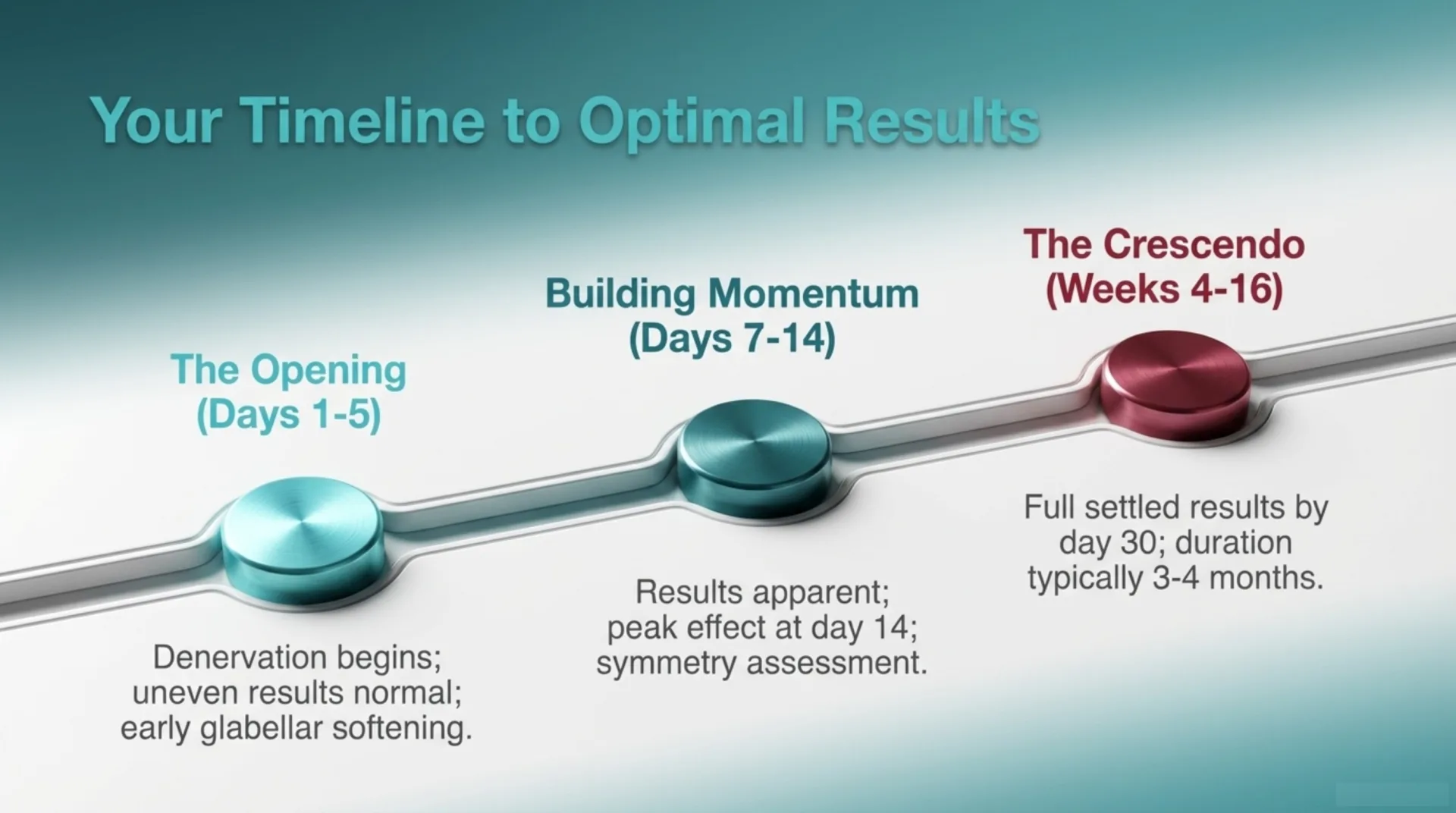
Timeline Note: Individual response varies based on metabolism, muscle mass, treatment area, unit count, and prior treatment history. The following represents typical clinical progression. Your Zvia provider sets personalized expectations during your consultation. Individual results may vary.
The Opening (Days 1–5)
SNAP-25 cleavage and acetylcholine blockade begin within hours of injection. The prescribing information describes chemical denervation of the injected muscles one to two days after treatment 1. By days three to five, initial smoothing is typically visible, particularly in the glabellar region, which tends to respond earliest. During this phase, it is normal for results to appear asymmetric — the neurotoxin is actively binding to nerve terminals, and not all injection sites activate at the same rate.
Building Momentum (Days 7–14)
By day seven to ten, results become noticeably apparent. Forehead lines smooth significantly, frown lines soften into a relaxed state, and crow’s feet diminish during smiling. Platysma bands, if treated, show progressive relaxation. The label describes the effect increasing in intensity through the first week after injection 1. Two weeks is the standard checkpoint — it is the primary assessment timepoint in the platysma trials, while the upper-face trials measured their primary endpoint at day 30 1. At a two-week follow-up, your Zvia provider assesses results and determines whether any touch-up units are warranted for optimal symmetry and smoothing.
The Crescendo (Weeks 4–16)
Full, settled results are typically apparent by day 30. Effects are generally maintained for three to four months 1, 12, though individual duration varies. Some clients notice movement returning at two and a half to three months; others maintain results for four months or longer. Re-treatment happens when movement returns, and no sooner than 90 days — BOTOX® Cosmetic has not been studied at intervals more frequent than every three months 1. Many clients find their intervals lengthen over time; that is a common clinical observation rather than something the registration trials set out to measure.
Is BOTOX® Right for You?
If you have noticed lines that make you look tired, stressed, or older than you feel — and those lines deepen every year despite a solid skincare routine — BOTOX® may be the missing piece. Dynamic wrinkles respond to targeted muscle modulation in ways that topical products cannot address.
If you are already investing in your skin through quality skincare, SPF, and healthy habits, and you want to maintain a refreshed appearance that matches how you feel — BOTOX® offers a precise, well-studied option.
Age context matters, but broadly. Adults in their late twenties and thirties may benefit from preventive treatment, addressing early dynamic lines before they become static creases. Clients in their forties through sixties often see the most pronounced improvement — the dermatologic literature describes the ideal candidates as adults between 40 and 60 whose wrinkles come from repeated muscle contraction 8, and in BOTOX® Cosmetic’s own trials responder rates appeared higher in subjects under 65 than in those 65 and older 1. There is no upper age cutoff, and that age pattern reflects what wrinkles are made of rather than a number on a calendar: lines driven by muscle movement respond to muscle relaxation, while lines driven by volume loss and gravity do not 8.
For those navigating perimenopause or hormonal shifts: BOTOX® addresses dynamic wrinkles specifically. If volume loss or skin laxity are also concerns, your provider may recommend complementary approaches. BOTOX® excels at what it does; a thoughtful provider knows when additional strategies are appropriate.
Important considerations: BOTOX® is not appropriate for individuals with neuromuscular disorders (myasthenia gravis, Lambert-Eaton syndrome), active infection at the injection site, or those who are pregnant or nursing 1. Aminoglycoside antibiotics and anticoagulants may interact with botulinum toxin and should be discussed with your provider 7.
Your Zvia provider in Lakewood, Colorado is the definitive voice. They will assess your facial anatomy, skin dynamics, muscle strength, and goals to determine the right approach. That evaluation is where good outcomes begin.
Your Treatment: What’s Involved
Before Your Session
Discontinue blood-thinning medications and supplements (aspirin, ibuprofen, fish oil, vitamin E) seven to ten days prior if medically safe — these increase bruising risk. Avoid alcohol for 24 to 48 hours before treatment. Arrive with clean skin, free of makeup. Inform your provider of any recent dental procedures, facial treatments, or medication changes.
The Session Itself
A typical BOTOX® appointment takes 15 to 30 minutes depending on the number of areas treated. Your provider maps precise injection points based on your individual muscle anatomy. Using fine needles (30–32 gauge), BOTOX® is placed at strategic locations. Most clients describe the sensation as a brief pinch.
Face Treatment
FDA-approved dosing for the upper face includes 20 units for forehead lines, 20 units across five injection sites for frown lines, and 24 units (12 per side) for crow’s feet — a combined 64 units across the three upper face zones when treated together 1. Your provider adjusts these numbers based on your individual muscle strength, skin thickness, and aesthetic goals. Stronger muscles may require more; lighter musculature, less.
Neck Treatment
For platysma bands, approved dosing is 26 units for one band on each side, 31 units for one band on one side and two on the other, or 36 units for two bands on each side 1. Your provider evaluates band prominence dynamically — grasping and isolating each band during contraction before determining placement and depth 10. Anatomical precision is particularly important in the neck, where the platysma is a thin, superficial sheet lying over the larynx and the musculature of swallowing 9, 10. Reviews of botulinum toxin in the lower face and neck report low and largely self-limited complication rates, while noting that site, dose, and technique still vary meaningfully between published protocols — which is exactly why the person holding the syringe matters 11. The October 2024 FDA approval established this as the newest validated cosmetic indication.
Lifestyle Integration
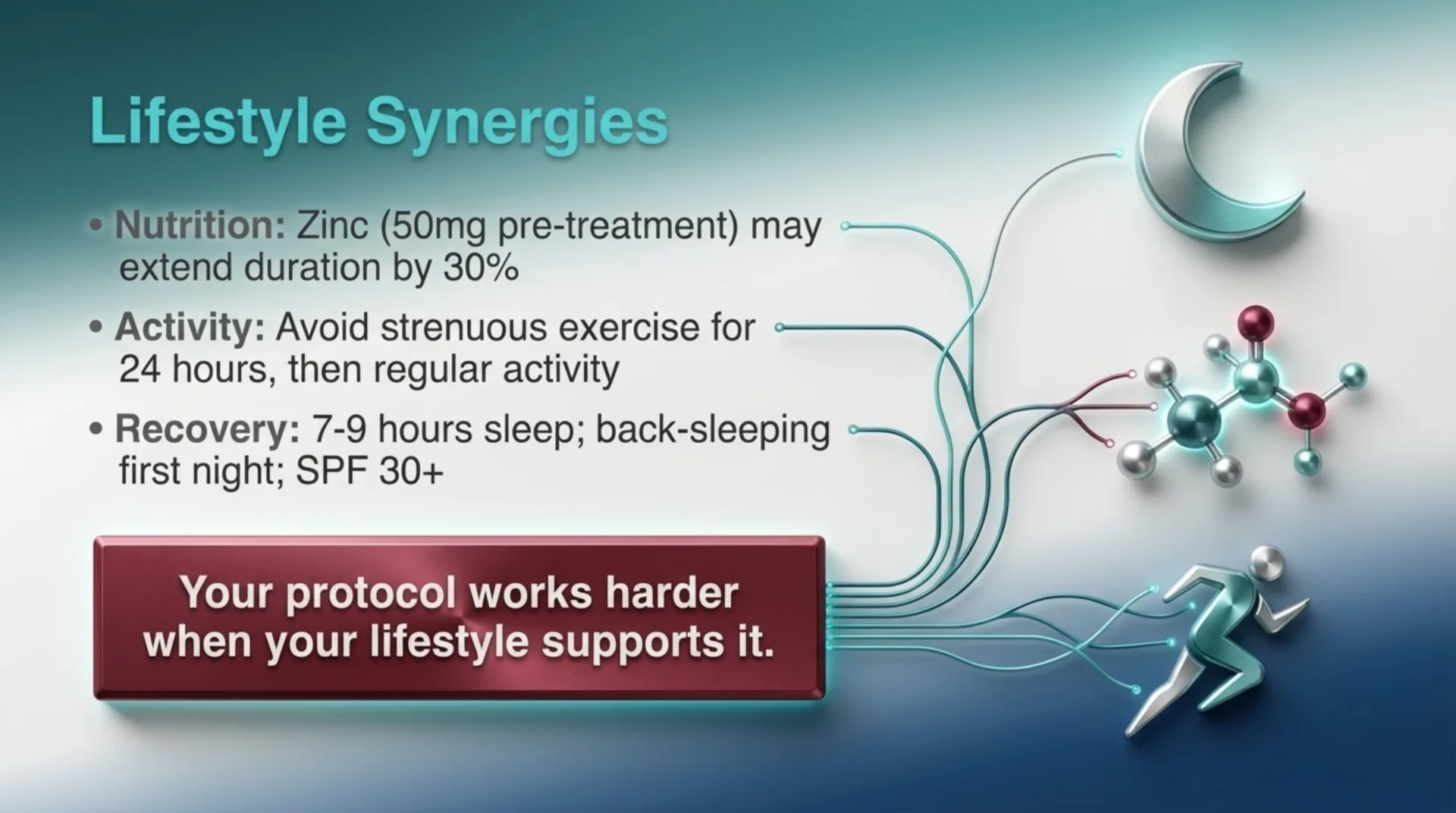
Your treatment results work within the context of your daily habits. Daily broad-spectrum SPF 30 or higher protects against UV-driven collagen breakdown — SPF is foundational to every aesthetic treatment plan. Antioxidant-rich nutrition, adequate hydration, and quality sleep (seven to nine hours) support skin resilience and collagen synthesis. Avoid strenuous exercise for 24 hours post-treatment and remain upright for four hours after injection. These lifestyle elements are integral to getting the most from your investment.
Maintenance Schedule
Most clients return every three to four months initially 1, 12. With consistent treatment, many find that intervals extend as the targeted muscles gradually reduce in bulk — a pattern providers see often, though it is not something the registration trials formally measured. Your provider tracks your response patterns and adjusts your schedule accordingly. Individual results may vary.
Why Choose Zvia for BOTOX®?
There is a meaningful difference between receiving BOTOX® and receiving BOTOX® well. The product in the vial is the same everywhere — the expertise behind the needle is not.
At Zvia Weight Loss & MedSpa, your provider brings a deep understanding of functional facial anatomy — not just where muscles are, but how they interact and compensate for one another. Your frontalis works in dynamic opposition to your brow depressors. Your corrugator and procerus create frown lines but also influence forehead movement. Your Zvia provider evaluates this entire dynamic system before placing a single injection — because treating isolated areas without understanding adjacent muscle relationships can produce unbalanced results.
This is not a five-minute, assembly-line appointment. Your provider takes the time to understand what you want your face to express — not just what you want it to stop doing. Unit counts are adjusted based on muscle mass, skin thickness, and treatment history. Injection placement is refined to the millimeter. For clients new to neurotoxin treatment, your provider may recommend a conservative first session, assess your response at two weeks, and refine the approach for subsequent visits.
That level of individualization is what separates Zvia from chain MedSpas, volume clinics, and providers who treat BOTOX® like a commodity. At Zvia, clinical precision drives the outcome — because your provider genuinely cares about what you see when you look in the mirror.
BOTOX® is a registered trademark of AbbVie Inc. Zvia Weight Loss & MedSpa is not affiliated with or endorsed by AbbVie.
Educational purposes only. Provider-supervised protocols required. Results may vary based on individual biological response.
Discuss whether BOTOX® is right for you with our clinical team.
References
- 1. Allergan, an AbbVie company BOTOX Cosmetic (onabotulinumtoxinA) for injection, for intramuscular use — Full Prescribing Information (revised 10/2024) . U.S. Food and Drug Administration / DailyMed (2024).
- 2. Allergan Aesthetics, an AbbVie company BOTOX Cosmetic (onabotulinumtoxinA) Receives FDA Approval for Moderate to Severe Vertical Bands Connecting the Jaw and Neck (Platysma Bands) . AbbVie News Center (2024).
- 3. Allergan Aesthetics, an AbbVie company The Science Behind BOTOX Cosmetic: Safety and Formulation . BOTOXCosmetic.com (2025).
- 4. Trindade de Almeida AR, Martins da Costa Marques ER, Contin LA, Trindade de Almeida C, Miot HA Long-Term Consecutive OnabotulinumtoxinA Injections for Facial Aesthetic Treatment: A Real-World Study . Dermatologic Surgery 51(12) , 1133-1138 (2025).
- 5. Brin MF, Burstein R Botox (onabotulinumtoxinA) mechanism of action . Medicine 102(S1) , e32372 (2023).
- 6. Meretsky CR, Umali JP, Schiuma AT A Systematic Review and Comparative Analysis of Botox Treatment in Aesthetic and Therapeutic Applications: Advantages, Disadvantages, and Patient Outcomes . Cureus 16(8) , e67961 (2024).
- 7. Witmanowski H, Błochowiak K The whole truth about botulinum toxin - a review . Advances in Dermatology and Allergology 37(6) , 853-861 (2020).
- 8. Cheng CM Cosmetic use of botulinum toxin type A in the elderly . Clinical Interventions in Aging 2(1) , 81-83 (2007).
- 9. Hu H, Kim SB, Wan J, Chan LKW, Lee AKW, Sydorchuk O, Jalali A, Corrêa MC, Kim JS, Yi KH Anatomical Guidelines and Technical Tips for Neck Aesthetics with Botulinum Toxin . Archives of Plastic Surgery 51(5) , 447-458 (2024).
- 10. Rohrich RJ, Savetsky IL, Cohen JM, Avashia YJ Effective Treatment of Platysma Bands with Neurotoxin . Plastic and Reconstructive Surgery - Global Open 8(6) , e2812 (2020).
- 11. Kassir M, Babaei M, Hasanzadeh S, Rezaei Tavirani M, Razzaghi Z, Robati RM Botulinium toxin applications in the lower face and neck: A comprehensive review . Journal of Cosmetic Dermatology 23(4) , 1205-1216 (2024).
- 12. Satriyasa BK Botulinum toxin (Botox) A for reducing the appearance of facial wrinkles: a literature review of clinical use and pharmacological aspect . Clinical, Cosmetic and Investigational Dermatology 12 , 223-228 (2019).